

Smart Medicine Comparison
Recommended Substitute
You Searched

Antazime 48mg/90mg/100mg/50mg Tablet
78.47% More Savings
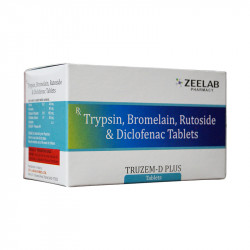
Why Choose our Truzem D Plus | Trypsin 48mg + Bromelain 90mg + Rutoside 100... ?
Save ₹ 164 - Enjoy up to 78.47% More Savings
Same Salt, Dosage & Strength as Antazime 48mg/90mg/100mg/50mg Tablet
Crafted in a WHO-GMP Certified Facility
President Award Winner - Trusted by Millions


Detail Comparison
| Parameter | Antazime 48mg/90mg/100mg/50mg Tablet | Truzem D Plus | Trypsin 48mg + Bromelain 90mg + Rutoside 100... |
|---|---|---|
| Composition | Trypsin (48mg) + Bromelain (90mg) + Rutoside (100mg) + Diclofenac (50mg) | Trypsin (48mg) + Bromelain (90mg) + Rutoside (100mg) + Diclo... |
| Quantity | 10 tablets | 10 Tablets In 1 Strip |
| Price | ₹ 209 High Price |
₹ 45 Save 78.47% |
| Prescription required | Yes | Yes |
Download India's most affordable pharmacy app
- Compare with medicine prices
- Save upto 90% on your medicine bills
DESCRIPTION:
Antazime Tablet is a combination medication consisting of Trypsin (48mg), Bromelain (90mg), Rutoside (100mg), and Diclofenac (50mg). This tablet is formulated to provide relief from pain, swelling, and inflammation due to conditions like arthritis, injuries, and post-surgical recovery. It is commonly used to reduce inflammation, promote healing, and alleviate discomfort in musculoskeletal and joint disorders.
Uses of Antazime Tablet
Antazime Tablet is used for the following purposes:
- Reducing pain, swelling, and inflammation caused by injuries such as sprains, strains, and muscle damage.
- Alleviating pain and swelling following surgical procedures.
- Managing pain and inflammation in conditions like arthritis and other joint disorders.
- Promoting recovery of soft tissue injuries and reducing associated swelling and discomfort.
How Antazime Tablet Works
Antazime Tablet contains a powerful combination of ingredients that work synergistically to provide effective relief:
- Trypsin: An enzyme that helps break down proteins involved in inflammation, promoting the reduction of swelling and pain.
- Bromelain: A natural enzyme from pineapple, which reduces inflammation, swelling, and bruising by breaking down inflammatory compounds.
- Rutoside: A flavonoid that strengthens blood vessels and improves circulation, aiding in the reduction of swelling and supporting tissue repair.
- Diclofenac: An NSAID (non-steroidal anti-inflammatory drug) that blocks the production of prostaglandins, chemicals responsible for inflammation and pain, thus reducing discomfort and swelling.
Benefits of Antazime Tablet
- Effective pain and inflammation relief for musculoskeletal injuries, arthritis, and post-surgical recovery.
- Promotes faster healing by reducing swelling and supporting tissue regeneration.
- Alleviates joint stiffness and discomfort, improving mobility in conditions like arthritis.
- Helps reduce bruising, swelling, and discomfort following injuries or surgeries.
- Supports overall recovery by improving blood flow and reducing inflammation at the site of injury or inflammation.
Dosage and How to Take Antazime Tablet
- Take Antazime Tablet as prescribed by your healthcare provider, usually after meals to minimize stomach irritation.
- Swallow the tablet whole with a glass of water. Do not chew or break it.
- If you miss a dose, take it as soon as you remember, unless it's almost time for the next dose. In that case, skip the missed dose and continue your regular schedule. Do not take two doses at once.
Side Effects of Antazime Tablet
Some possible side effects of Antazime Tablet include:
- Gastrointestinal discomfort such as nausea, bloating, or indigestion.
- Headaches or dizziness.
- Changes in bowel movements, such as diarrhea or constipation.
In rare cases, serious side effects may occur, such as:
- Severe stomach pain or gastrointestinal bleeding.
- Signs of an allergic reaction, such as a rash, swelling, or difficulty breathing.
- Severe dizziness, fainting, or lightheadedness.
Safety Advice
- Consult your doctor before taking Antazime Tablet if you have any gastrointestinal issues like ulcers, bleeding disorders, or cardiovascular problems.
- Pregnant or breastfeeding women should seek medical advice before using this medication.
- Inform your doctor about any other medications you are taking, particularly anticoagulants, blood thinners, or other NSAIDs.
- Alcohol should be consumed in moderation, as it may increase the risk of gastrointestinal irritation and bleeding.
- If you experience severe side effects, such as allergic reactions or severe stomach issues, seek medical help immediately.
Frequently Asked Questions (FAQs)
Q: Can I take Antazime Tablet with other pain medications?
A: It is important to consult your doctor before taking Antazime Tablet alongside other pain medications, especially other NSAIDs, to avoid potential interactions or side effects.
Q: How long should I take Antazime Tablet?
A: The duration of use depends on your condition and your doctor’s recommendation. Follow your healthcare provider’s advice for the best results.
Q: Can Antazime Tablet cause stomach problems?
A: As with other NSAIDs, Antazime Tablet may cause stomach irritation. Taking the tablet with food can help minimize this. If you experience persistent stomach discomfort, consult your doctor.
Q: Is Antazime Tablet suitable for elderly patients?
A: Elderly individuals may be more susceptible to the side effects of NSAIDs. Consult with your doctor before using Antazime Tablet if you are elderly or have any pre-existing conditions.






 Added!