

Smart Medicine Comparison
Recommended Substitute
You Searched

Mufocin 2% Ointment
52.38% More Savings
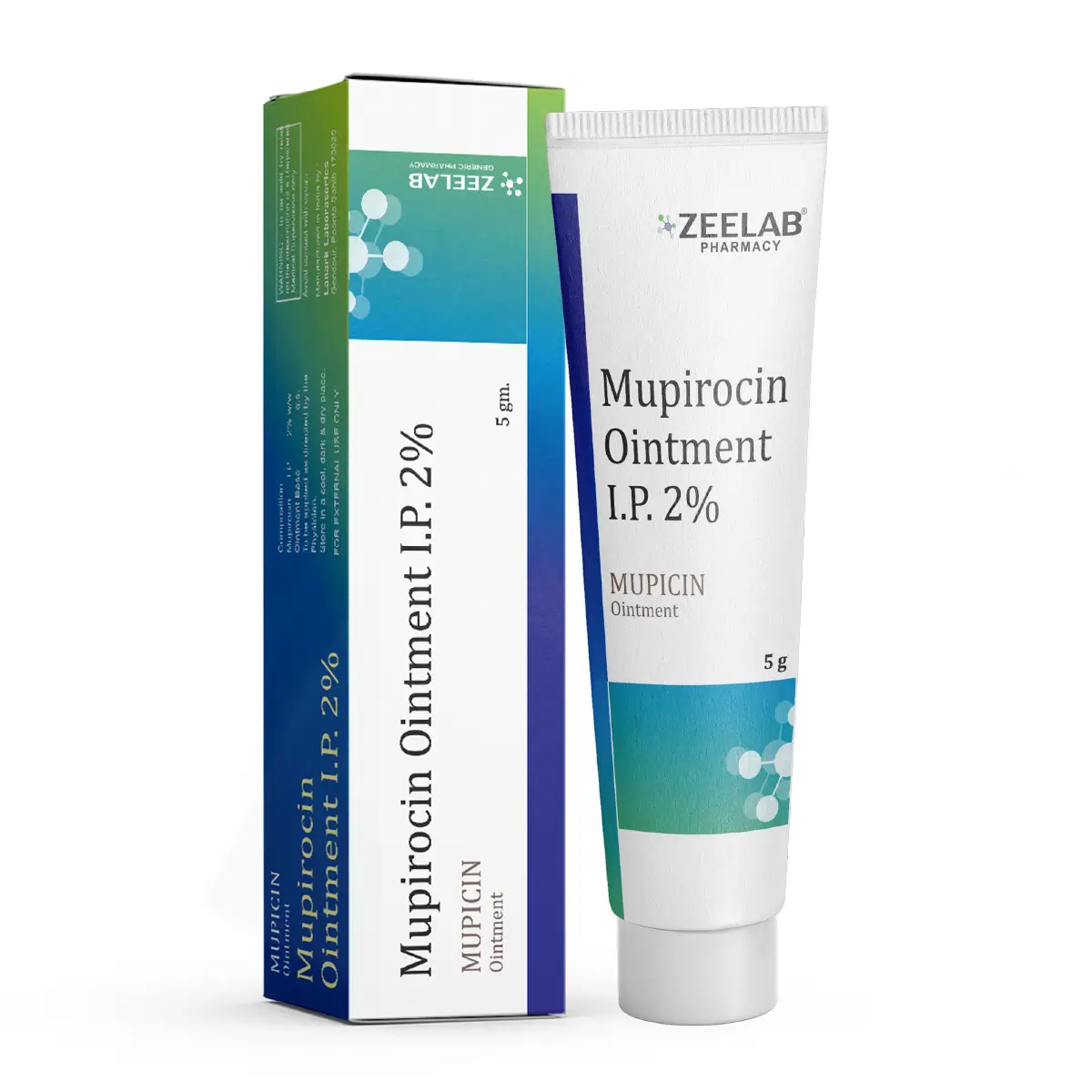
Why Choose our Mupicin Mupirocin Ointment IP 2% | Treats Bacterial Skin Inf... ?
Save ₹ 55 - Enjoy up to 52.38% More Savings
Same Salt, Dosage & Strength as Mufocin 2% Ointment
Crafted in a WHO-GMP Certified Facility
President Award Winner - Trusted by Millions


Detail Comparison
| Parameter | Mufocin 2% Ointment | Mupicin Mupirocin Ointment IP 2% | Treats Bacterial Skin Inf... |
|---|---|---|
| Composition | Mupirocin (2% w/w) | Mupirocin (2% w/w) |
| Quantity | 5 gm Ointment | 5gm In 1 Tube |
| Price | ₹ 105 High Price |
₹ 50 Save 52.38% |
| Prescription required | Yes | Yes |
Download India's most affordable pharmacy app
- Compare with medicine prices
- Save upto 90% on your medicine bills
COMPOSITION:
Mupirocin (2% w/w)DESCRIPTION:
Mufocin 2% Ointment contains Mupirocin (2% w/w), a highly effective topical antibiotic that is used to treat various bacterial skin infections. It works by preventing the growth of bacteria, which makes it ideal for treating conditions like impetigo, infected cuts, and folliculitis. Mufocin 2% Ointment helps to reduce symptoms such as redness, swelling, and pain, while promoting faster healing and preventing the spread of infection to healthy skin.
Uses of Mufocin 2% Ointment
Mufocin 2% Ointment is used for treating the following bacterial skin infections:
- Impetigo (contagious skin infection causing sores and blisters)
- Folliculitis (infection of hair follicles)
- Infected cuts, wounds, and scrapes
- Other minor bacterial skin infections
How Mufocin 2% Ointment Works
Mufocin 2% Ointment contains Mupirocin, a topical antibiotic that works by inhibiting bacterial protein synthesis. It binds to bacterial ribosomes, blocking their ability to produce proteins essential for their growth and survival. As a result, the bacteria are unable to multiply and are killed, allowing the infection to heal and preventing its spread.
Benefits of Mufocin 2% Ointment
Using Mufocin 2% Ointment offers several benefits:
- Effectively treats a range of bacterial skin infections
- Promotes faster healing of infected skin
- Relieves symptoms like swelling, redness, and discomfort
- Prevents the infection from spreading to surrounding healthy skin
How to Use Mufocin 2% Ointment
Apply a thin layer of Mufocin 2% Ointment directly to the affected area two to three times a day, or as directed by your healthcare provider. Gently rub the ointment into the skin to cover the entire infected area. Be sure to wash your hands before and after applying the ointment to prevent contamination. Complete the full prescribed course of treatment, even if symptoms improve, to ensure complete healing of the infection.
Side Effects of Mufocin 2% Ointment
Common side effects of Mufocin 2% Ointment include:
- Skin irritation or redness at the application site
- Burning or stinging sensation
- Itching at the treated area
Serious side effects (seek immediate medical attention if you experience any of the following):
- Severe allergic reactions, such as swelling of the face, lips, or throat
- Severe skin irritation, open sores, or blistering
Safety Advice
Before using Mufocin 2% Ointment, inform your healthcare provider if you have any of the following conditions:
- Allergy to Mupirocin or any other ingredient in the ointment
- Open wounds, burns, or broken skin (unless advised by your doctor)
Avoid applying the ointment to the eyes, mouth, or mucous membranes. If the ointment comes into contact with these areas, rinse immediately with water. If you notice any worsening of symptoms or lack of improvement, consult your healthcare provider.
Frequently Asked Questions (FAQs)
Q: How often should I apply Mufocin 2% Ointment?
A: Mufocin 2% Ointment is typically applied two to three times a day to the affected area, or as directed by your healthcare provider. Always follow their instructions for the best results.
Q: Can I use Mufocin 2% Ointment on my face?
A: Yes, Mufocin 2% Ointment can be used for facial infections, but avoid contact with the eyes. Always follow your healthcare provider's guidance when using it on the face.
Q: How long should I continue using Mufocin 2% Ointment?
A: You should continue using Mufocin 2% Ointment for the full prescribed duration, even if symptoms improve before the treatment is completed. This ensures complete eradication of the infection.
Q: Can Mufocin 2% Ointment be used in children?
A: Yes, Mufocin 2% Ointment can be used in children. However, it is essential to follow the proper dosage and application instructions provided by your healthcare provider.
Q: Is Mufocin 2% Ointment safe to use during pregnancy?
A: Mufocin 2% Ointment should only be used during pregnancy if prescribed by a doctor. Always consult your healthcare provider before using any medication during pregnancy or breastfeeding.






 Added!