

Smart Medicine Comparison
Recommended Substitute
You Searched

Asorib T4 Tablet
60% More Savings
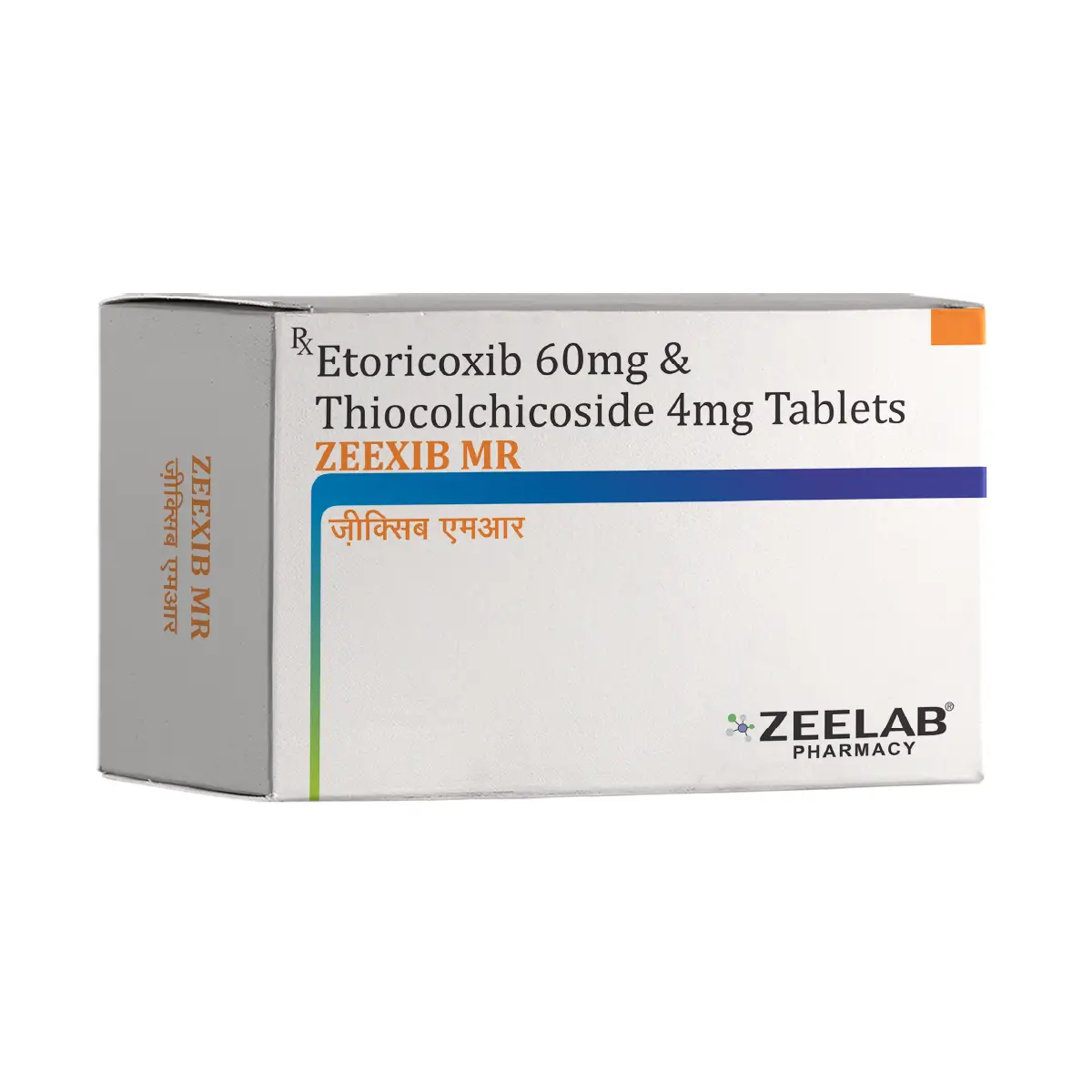
Why Choose our Zeexib MR | Etoricoxib 60mg + Thiocolchicoside 4mg Tablet |... ?
Save ₹ 135 - Enjoy up to 60% More Savings
Same Salt, Dosage & Strength as Asorib T4 Tablet
Crafted in a WHO-GMP Certified Facility
President Award Winner - Trusted by Millions


Detail Comparison
| Parameter | Asorib T4 Tablet | Zeexib MR | Etoricoxib 60mg + Thiocolchicoside 4mg Tablet |... |
|---|---|---|
| Composition | Etoricoxib (60mg) + Thiocolchicoside (4mg) | Etoricoxib (60mg) + Thiocolchicoside (4mg) |
| Quantity | 10 tablets | 10 Tablets In 1 Strip |
| Price | ₹ 225 High Price |
₹ 90 Save 60% |
| Prescription required | Yes | Yes |
Download India's most affordable pharmacy app
- Compare with medicine prices
- Save upto 90% on your medicine bills
COMPOSITION:
Etoricoxib (60mg) + Thiocolchicoside (4mg)DESCRIPTION:
Asorib T4 Tablet combines two active ingredients, Etoricoxib (60mg) and Thiocolchicoside (4mg), offering effective treatment for pain, inflammation, and muscle spasms. Etoricoxib is a non-steroidal anti-inflammatory drug (NSAID) that helps reduce pain and inflammation by inhibiting the COX-2 enzyme. Thiocolchicoside is a muscle relaxant that alleviates muscle spasms and stiffness. This combination therapy is commonly used to treat conditions such as osteoarthritis, rheumatoid arthritis, and acute musculoskeletal injuries, improving overall mobility and comfort.
Uses of Asorib T4 Tablet
Asorib T4 Tablet is used for the treatment of the following conditions:
- Osteoarthritis
- Rheumatoid arthritis
- Acute musculoskeletal pain
- Muscle spasms
- Post-operative pain relief
How Asorib T4 Tablet works
Asorib T4 Tablet works by combining the effects of two active ingredients. Etoricoxib blocks the COX-2 enzyme, which plays a role in causing inflammation and pain. This reduces pain and swelling in affected areas. Thiocolchicoside, on the other hand, works as a muscle relaxant by acting on the central nervous system to relieve muscle spasms and stiffness, improving muscle flexibility and function. Together, they help alleviate both pain and muscle discomfort.
Benefits of Asorib T4 Tablet
The main benefits of Asorib T4 Tablet include:
- Reduces inflammation and pain in conditions such as osteoarthritis and rheumatoid arthritis
- Relieves muscle spasms and stiffness, improving flexibility
- Enhances mobility and range of motion
- Provides convenient once-daily dosing for ease of use
- Improves overall comfort, quality of life, and daily function
How to take Asorib T4 Tablet
Take Asorib T4 Tablet exactly as prescribed by your doctor. The typical recommended dosage is one tablet per day, with or without food. Swallow the tablet whole with a glass of water. Do not chew, crush, or break the tablet. Follow your doctor's instructions carefully to achieve the best results and ensure safe use of the medication.
Side effects of Asorib T4 Tablet
Common side effects of Asorib T4 Tablet include:
- Indigestion or upset stomach
- Headache
- Dizziness
- Rash or itching
Serious side effects that require immediate medical attention include:
- Severe abdominal pain, ulcers, or gastrointestinal bleeding
- Chest pain, shortness of breath, or palpitations
- Severe allergic reactions, such as swelling of the face, lips, tongue, or throat
- Unusual tiredness, weakness, or yellowing of the skin or eyes
Safety advice
Before using Asorib T4 Tablet, inform your doctor if you have any of the following conditions:
- Heart disease, high blood pressure, or a history of stroke
- Liver or kidney problems
- Gastrointestinal issues, such as ulcers or bleeding
- Allergic reactions to similar medications
It is advised to avoid alcohol consumption while using Asorib T4 Tablet as it can increase the risk of side effects. Pregnant or breastfeeding women should consult their doctor before using this medication, especially in the third trimester of pregnancy. Always follow your healthcare provider's recommendations for safe and effective use.
Frequently Asked Questions (FAQs)
Q: Can I take Asorib T4 Tablet with other medications?
A: Always consult your doctor before combining Asorib T4 Tablet with other medications, especially other pain relievers, muscle relaxants, or blood thinners, as interactions may occur.
Q: How long should I take Asorib T4 Tablet?
A: The duration of treatment should be determined by your doctor based on your condition. Follow your doctor’s instructions for the best results.
Q: What should I do if I miss a dose of Asorib T4 Tablet?
A: If you miss a dose, take it as soon as you remember, unless it's almost time for your next dose. In that case, skip the missed dose. Do not take two doses at once.
Q: Is Asorib T4 Tablet safe for long-term use?
A: Long-term use of Asorib T4 Tablet should be monitored by your doctor, especially if you have pre-existing heart, liver, or kidney conditions. Your doctor will evaluate the risks and benefits of continued use based on your health status.






 Added!