

Smart Medicine Comparison
Recommended Substitute
You Searched

Torimac MR Tablet
64% More Savings
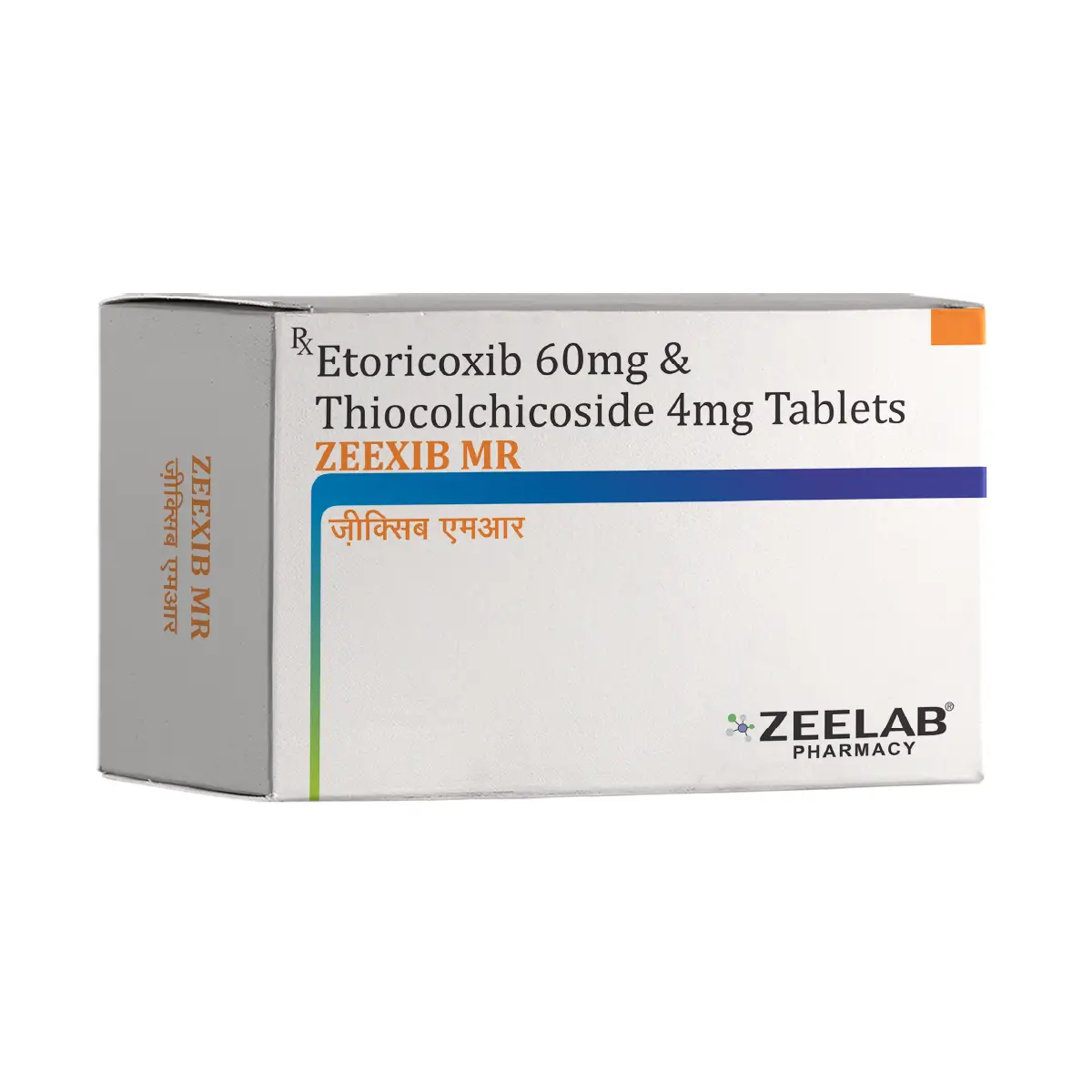
Why Choose our Zeexib MR | Etoricoxib 60mg + Thiocolchicoside 4mg Tablet |... ?
Save ₹ 160 - Enjoy up to 64% More Savings
Same Salt, Dosage & Strength as Torimac MR Tablet
Crafted in a WHO-GMP Certified Facility
President Award Winner - Trusted by Millions


Detail Comparison
| Parameter | Torimac MR Tablet | Zeexib MR | Etoricoxib 60mg + Thiocolchicoside 4mg Tablet |... |
|---|---|---|
| Composition | Etoricoxib (60mg) + Thiocolchicoside (4mg) | Etoricoxib (60mg) + Thiocolchicoside (4mg) |
| Quantity | 10 tablets | 10 Tablets In 1 Strip |
| Price | ₹ 250 High Price |
₹ 90 Save 64% |
| Prescription required | Yes | Yes |
Download India's most affordable pharmacy app
- Compare with medicine prices
- Save upto 90% on your medicine bills
COMPOSITION:
Etoricoxib (60mg) + Thiocolchicoside (4mg)DESCRIPTION:
Torimac-MR Tablet is a combination medication containing Etoricoxib (60mg) and Thiocolchicoside (4mg). Etoricoxib is a non-steroidal anti-inflammatory drug (NSAID) that reduces pain and inflammation, while Thiocolchicoside is a muscle relaxant that helps relieve muscle spasms and stiffness. This combination provides effective relief for conditions associated with musculoskeletal pain, arthritis, and muscle-related disorders, improving mobility and overall comfort.
Uses of Torimac-MR Tablet
Torimac-MR Tablet is used to treat the following conditions:
- Osteoarthritis
- Rheumatoid arthritis
- Musculoskeletal pain
- Muscle spasms
- Post-surgical pain management
How Torimac-MR Tablet works
Torimac-MR Tablet works by combining the anti-inflammatory effects of Etoricoxib and the muscle-relaxing properties of Thiocolchicoside. Etoricoxib inhibits the COX-2 enzyme, which plays a significant role in causing pain and inflammation. Thiocolchicoside, on the other hand, works to reduce muscle spasms by relaxing the muscles. Together, these ingredients provide dual relief from pain and muscle stiffness.
Benefits of Torimac-MR Tablet
The key benefits of Torimac-MR Tablet include:
- Effective relief from pain and inflammation associated with arthritis
- Reduces muscle spasms and stiffness
- Improves flexibility and joint mobility
- Promotes faster recovery from musculoskeletal injuries or surgeries
- Convenient once-daily dosage for ease of use
- Helps in improving overall quality of life by reducing pain and discomfort
How to take Torimac-MR Tablet
Take Torimac-MR Tablet as directed by your doctor. The typical dosage is one tablet per day, preferably with or after food. Swallow the tablet whole with a glass of water. Do not chew, crush, or break the tablet. Follow your healthcare provider's instructions regarding the duration of treatment and the appropriate dosage for your condition.
Side effects of Torimac-MR Tablet
Common side effects of Torimac-MR Tablet may include:
- Indigestion or upset stomach
- Headache
- Dizziness or lightheadedness
- Skin rash or itching
Serious side effects that require immediate medical attention include:
- Severe abdominal pain, gastrointestinal bleeding, or ulcers
- Chest pain, shortness of breath, or irregular heartbeat
- Severe allergic reactions, such as swelling of the face, lips, tongue, or throat
- Yellowing of the skin or eyes, unusual tiredness, or weakness
Safety advice
Before taking Torimac-MR Tablet, inform your doctor if you have any of the following conditions:
- Heart disease, high blood pressure, or a history of stroke
- Liver or kidney issues
- Gastrointestinal problems, such as ulcers or bleeding
- Allergic reactions to similar medications
It is recommended to avoid alcohol while taking Torimac-MR Tablet, as it may increase the risk of gastrointestinal side effects. If you are pregnant, planning to become pregnant, or breastfeeding, consult your doctor before using this medication. Always follow your healthcare provider's instructions for safe use of the tablet.
Frequently Asked Questions (FAQs)
Q: Can I take Torimac-MR Tablet with other medications?
A: Always inform your doctor about all the medications you are taking, including over-the-counter drugs and supplements, to avoid possible interactions with Torimac-MR Tablet.
Q: How long should I take Torimac-MR Tablet?
A: The duration of treatment will depend on your specific medical condition and your doctor’s advice. Follow your doctor’s instructions for the length of treatment.
Q: What should I do if I miss a dose of Torimac-MR Tablet?
A: If you miss a dose, take it as soon as you remember, unless it is almost time for your next dose. In that case, skip the missed dose and continue with your regular dosing schedule. Do not take two doses to make up for the missed dose.
Q: Is Torimac-MR Tablet safe for long-term use?
A: Long-term use of Torimac-MR Tablet should be supervised by your healthcare provider, especially for those with underlying health conditions such as heart or liver problems. Your doctor will evaluate the benefits and risks of continued therapy based on your individual health condition.






 Added!