

Best Deworming Medicine for Kids in India: Top Syrups, Tablets, Dosage & Age Guide

Kids need extra care and attention because they are often careless about hygiene and good eating habits. They often pick up parasitic worms from contaminated soil, food, water, or due to poor hygiene.
According to WHO, around 270 million preschool children are affected by intestinal worms that make nutrient absorption difficult, cause weakness and diarrhoea, and increase the risk of anaemia. As a parent, you may get confused about what to do in such situations.
This blog is a guide on deworming children, the best deworming medicines for children, and tips to prevent recurrence.
What are the Best Deworming Medicines for Kids in India?
Many doctors say that Albendazole and Mebendazole are the best deworming medicines for kids in India, with Albendazole being the first choice.
Which one should be given to a child is decided by the doctor, considering the age, weight, and type of suspected worm.
|
Deworming medicine |
Common form |
Commonly used for |
|
Suspension/Syrup, Tablet |
Several intestinal worms |
|
|
Mebendazole |
Tablet, Chewable form in some products |
Roundworms, whipworms and hookworms |
|
Suspension, Tablet |
Particularly useful for pinworms and some roundworms |
|
|
Combination medicines |
Syrup/Tablet |
Selected worm infections |
What are Intestinal Worms in Children?
Intestinal worms are small parasitic organisms living in the intestines of children and feed on their nutrients and blood. They usually enter a child’s body through polluted food, water, or soil.
Common Types of Intestinal Worms:
|
Worm |
How Children Get It |
Common Symptoms |
|
Roundworms |
Contaminated soil/food |
Stomach pain, poor appetite |
|
Pinworms |
Hand-to-mouth contact |
Itching around anus, disturbed sleep |
|
Hookworms |
Walking barefoot on infected soil |
Weakness, anaemia |
|
Whipworms |
Contaminated food/water |
Diarrhoea, stomach cramps |
|
Tapeworms |
Undercooked meat, contaminated water |
Weight loss, appetite changes |
What are the Symptoms of Worms in Children?
Always be attentive if you see unusual signs or when your child complains about stomach pain, itching in the anal region, vomiting, etc.; these might be signs of a worm infection. Other signs may include:
- Loss of appetite
- Stomach pain or cramps
- Itching around the anus
- Poor weight gain
- Worms or worm segments in stool
- Weakness or tiredness
- Diarrhoea
- Nausea
- Bloating
- Possible anaemia in heavier infections
Note: It is possible that your kids won’t show any kind of symptoms even if infected by a worm; therefore, routine deworming of kids is important.
Also read: Medicine For Stomach Worms
How Do Children Get Worm Infections?
Children can get worm infections when worm eggs or larvae enter the body through contaminated food, water, soil, or poor hygiene.
Common reasons for infection might be:
- Walking around barefoot in contaminated soil
- Consumption of contaminated food or water
- Not washing hands before eating
- Putting dirty fingers or objects in the mouth
- Eating meat that is not cooked properly
Why is Deworming Important for Children?
Worm infections interfere with your child's nutrition and may even affect their growth and overall health. This is why deworming babies and children is important.
Deworming is so important that the Government of India started a National Deworming Programme to provide albendazole to children (1 to 19 years) through schools and Anganwadi centres every 6 months.
When Should You Deworm Your Child?
WHO and India’s National Deworming Programme, routine deworming should start after a child reaches 1 year of age. Before that, deworming is generally not recommended unless advised by a doctor.
Kids who go to school are often included in the NDD (National Deworming Day) drives happening twice a year, in February and August.
|
Child's Age |
Can Deworm? |
Doctor Advice |
|
Below 1 year |
Usually not, unless prescribed |
Consult doctor first |
|
1–2 years |
Yes, with correct dose |
Use only paediatrician-advised medicine |
|
2–19 years |
Yes |
Standard deworming schedule applies |
Age-Wise Deworming Medicine Guide
Children of different ages need medicines accordingly. The dosage and form of medication are prescribed with the child's ability to take and digest it in mind.
Deworming Medicine for a Child Under 1 Year Old
Deworming medicines are not commonly used for babies under 12 months because worm infections are rare at this stage.
- Deworming is not routinely given at this age.
- If a worm infection is confirmed by a doctor, treatment is decided by them only.
- Never give deworming medicine to an infant without medical supervision.
Deworming Medicine for 1 to 2 Years (12–23 Months)
Worm infections are quite common in toddlers aged 1 to 2 years, but they can be managed through deworming syrups.
- Suitable medicine: Albendazole
- Preferred form: Syrup/suspension (easy to feed babies).
- General dosing approach: Usually given a lower dose depending on the child’s weight.
Deworming Medicine for 2 to 19 Years
Children who fall between ages 2 and 19 years old are prone to being exposed to pinworms or roundworms from their environment.
- Suitable medicine: Albendazole, Mebendazole, or Pyrantel Pamoate
- Preferred form: Chewable tablets
- General dosing approach: Dosing is higher compared to toddlers but still depends on the child’s weight and type of medication.
Deworming Syrup vs Tablet: Which is Better for Children?
Deworming medicine for kids usually comes in two forms: Syrup and Tablet. The medicine form that is a better choice for your kid depends on their age, swallowing ability, and the doctor’s prescription.
|
Feature |
Syrup |
Tablet |
|
Easy to swallow |
Yes, ideal for younger kids |
Needs chewing ability |
|
Suitable age |
From 1 year onward |
Usually 2 years and above |
|
Dosing accuracy |
Easy to measure by weight |
Fixed dose per tablet |
|
Convenience |
Needs measuring spoon/cup |
Simple, no measuring needed |
Best Deworming Syrups & Tablets Recommendations for Kids in India by Zeelab Pharmacy
Choose trusted deworming syrups and tablets from Zeelab Pharmacy, offering convenient options for children with age-appropriate formulations to support safe and effective worm treatment.
Banzole 400 Anti Worm Tablet
Banzole 400 is an albendazole deworming tablet that works against intestinal worm infections in children.
- Composition: Albendazole (400 mg)
- Benefits: Helps treat intestinal worm infections and eliminate parasitic worms.
- Targets: Roundworms, hookworms, whipworms, pinworms, tapeworms and other susceptible worms.
- Good for which age group: Generally used in children 2 years and above when recommended
Banzole Oral Suspension
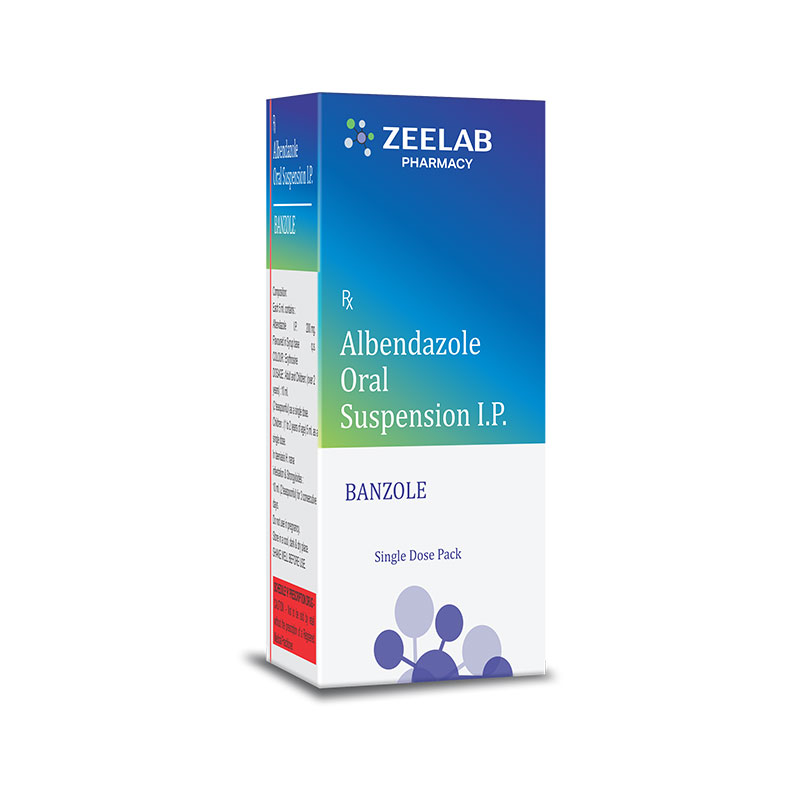
Banzole Oral Suspension is an albendazole deworming syrup suitable for children who cannot swallow tablets.
- Composition: Albendazole (200 mg)
- Benefits: Helps treat intestinal worm infections and eliminate susceptible parasitic worms.
- Targets: Roundworms, hookworms, whipworms, pinworms, tapeworms and other susceptible worms.
- Good for which age group: Suitable for young children when prescribed appropriately
Deworming Dosage Guide for Children
The correct deworming dose depends on several factors like the child’s age, weight, the type of worm and more.
After analysing these factors, the doctor will decide on which medicine and dosage is appropriate for your kid.
|
What determines the dose? |
Why it matters |
|
Child’s age |
Younger children may need a different dose or formulation than older children. |
|
Type of medicine |
Albendazole, mebendazole and other deworming medicines have different dosing instructions. |
|
Type of worm |
Treatment can vary depending on the worm causing the infection. |
|
Medicine strength |
Different syrups and tablets may contain different amounts of medicine. |
|
Reason for treatment |
Routine deworming and treatment of a confirmed infection may follow different schedules. |
How to Give Deworming Medicine to a Child?
For routine albendazole administration under India’s National Deworming Day, the medicine can be given on an empty stomach, and children should chew the tablet properly.
- Deworming medicine can usually be given at any time of day, though many doctors recommend the morning or after a meal to reduce stomach upset.
- If your child vomits soon after taking the dose, contact your doctor about whether to repeat it.
- For a missed dose, don't double up. Ask your doctor for guidance.
- Repeat doses (sometimes after 2 weeks) may be advised depending on the worm type.
How Long Does Deworming Medicine Take to Work?
The time deworming medicine takes to work depends on the type of worm, infection severity, and the child’s response.
- First 24 hours: The medicine starts to work, but symptoms may not improve immediately.
- After 2 or 3 days: Discomfort, bloating, and stomach pain may start to go away.
- Within 1 week: If worms were the cause, appetite, energy, and general comfort might all improve.
- Worms in stool: Dead worms may sometimes be seen, but not always.
Side Effects of Deworming Medicine in Children
Albendazole and other commonly used deworming medicines are generally well tolerated, but some children might go through a few mild side effects such as:
- Mild stomach pain
- Loose motions
- Nausea
- Vomiting
- Headache
- Temporary loss of appetite
Can You Deworm Your Child Naturally?
Apart from the use of deworming medicines, including certain foods can also help in improving gut health. Such foods may include:
- Papaya
- Pumpkin seeds
- Garlic
- Turmeric
- Fibre-rich foods
These foods may support a healthy gut, but they cannot replace proven deworming medicines for treating a confirmed worm infection. Use them as a supportive habit, not a substitute for treatment.
How to Prevent Worm Infections in Kids from Coming Back?
Worm infections can leave your child in discomfort. Even after proper medications and treatment, sometimes they return. To prevent this, as a parent, you need to follow these things:
- Encourage regular handwashing, especially before meals
- Keep your child's nails trimmed
- Make sure kids are wearing shoes when they are outside
- Thoroughly wash fruits and vegetables
- Cook food well, especially meat
- Use clean drinking water
- Regularly wash your child’s clothes and bedsheets
- Treat other family members if the doctor advises
- If advised, repeat the deworming procedure
When Should You See a Doctor?
Some signs require the need of professional medical intervention in time to avoid serious complications. These may include:
- Symptoms that persist after therapy
- Stool with blood
- Weight loss that is not explained
- Recurrent worm infections
- Continuous vomiting
- Severe diarrhoea
- Age under 1 year with suspected worms
- Any underlying immune condition
Conclusion
Worm infections are common in children. But they can be managed by giving your child the right deworming syrups or tablets.
Albendazole is the most often used deworming medication; mebendazole and pyrantel pamoate are also appropriate choices in some situations.
Regular deworming becomes crucial after a child reaches one since worm infections can occasionally show no signs.
Apart from this, teaching your kids good habits like regular handwashing, eating well, proper sanitation, etc. can reduce infection risk.
Frequently Asked Questions (FAQs)
Ans.Banzole 400 Anti Worm Tablet is one of the best deworming medicines for children, formulated with 400 mg Albendazole.
Ans.Banzole Oral Suspension from Zeelab Pharmacy contains albendazole and is a convenient liquid option for children who may have difficulty swallowing tablets.
Ans.Common signs include anal itching, stomach pain, poor appetite, diarrhoea, bloating, weakness, poor weight gain, or worms noticed in stool.
Ans.Routine deworming generally starts from 1 year of age in India; children younger than one year should receive medical advice first.
Ans.Frequency depends on infection risk and local recommendations. India’s National Deworming Programme provides deworming twice yearly for eligible children.
Ans.Babies below one year should not be routinely dewormed without medical advice. Consult a paediatrician if worm infection is suspected.
Ans.Deworming medicines commonly don’t require a prescription, but parents should consult a doctor before choosing deworming treatment or determining the dose for their child.
Ans.Follow the specific medicine and your doctor’s instructions. It is usually taken after meals to avoid stomach discomfort.
Ans.Generally, milk does not need to be avoided after deworming, but follow the medicine label or your doctor’s specific instructions.
Ans.Deworming medicines begin acting against the worms just after intake, while noticeable symptom improvement may take several days depending on infection severity.
Ans.Not seeing worms after treatment is normal. Worms may be digested or passed unnoticed, so visible worms are not required for treatment success.
Ans.Yes, mild diarrhoea or loose stools can occur temporarily after deworming. But persistent or severe diarrhoea requires medical evaluation without delay.
Ans.Yes, children can generally attend school after deworming if they feel well. Keep them home if significant vomiting, diarrhoea, or illness occurs.
Ans.Give normal, balanced meals with fruits, vegetables, whole grains, protein, and adequate fluids unless the doctor recommends dietary restrictions.
Ans.Yes, children can have intestinal worms without noticeable symptoms. Some infections remain mild or symptom-free, which is why preventive deworming may be recommended in high-risk areas.
Albendazole (200 mg)
10ml In 1 Bottle
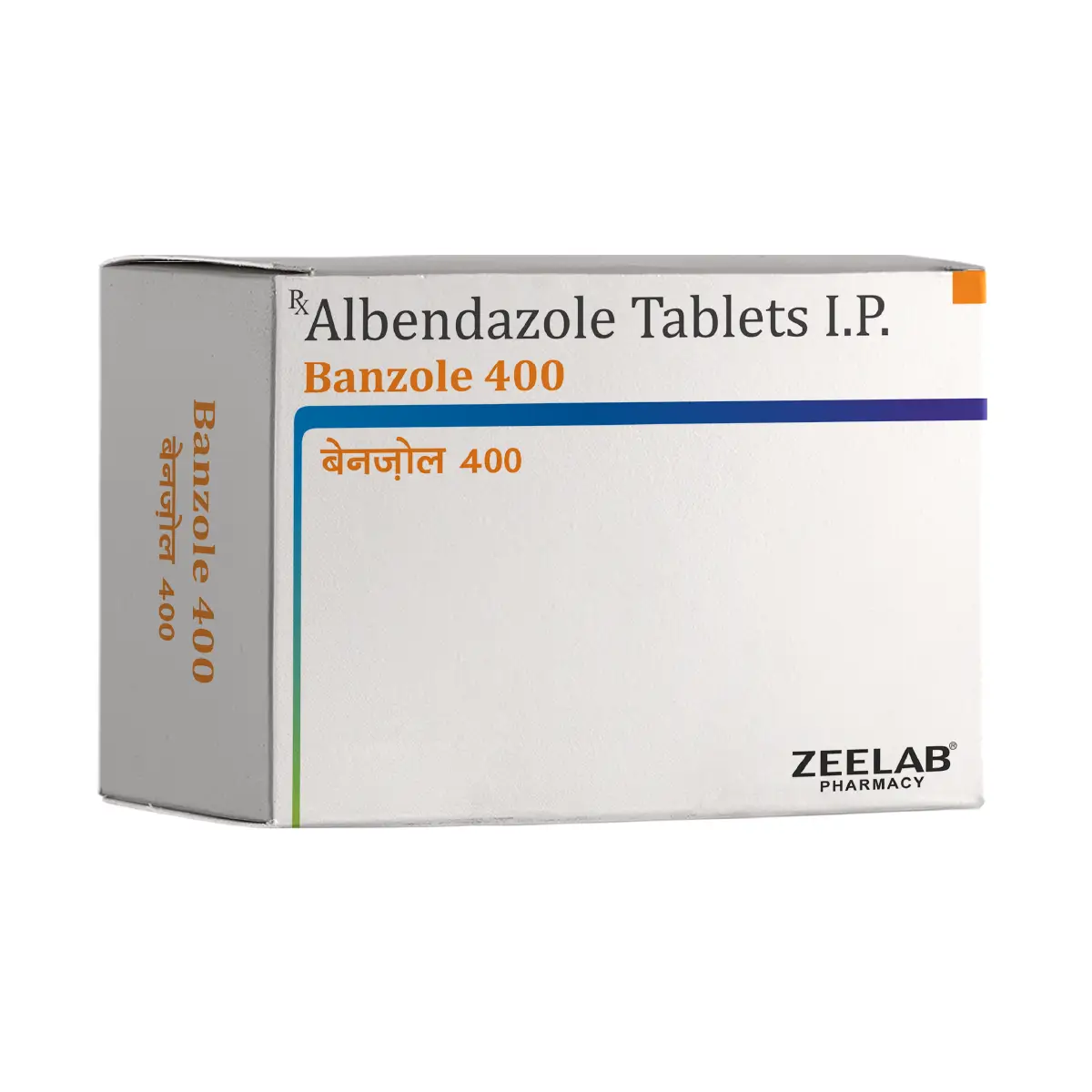
Albendazole (400 mg)
1 Tablet In 1 Strip
References
Recent Blogs






Disclaimer : Zeelab Pharmacy provides health information for knowledge only. Do not self-medicate. Always consult a qualified doctor before starting, stopping, or changing any medicine or treatment.
Related Products


₹ 0
0
Items added
Quick Links
Categories
Our Policies

Our Socials


Subscribe

2026 Copyright By © Zeelab Pharmacy Private Limited. All Rights Reserved
Our Payment Partners

 Added!