

Chia Seeds vs Isabgol for Constipation: Which One Should You Choose?
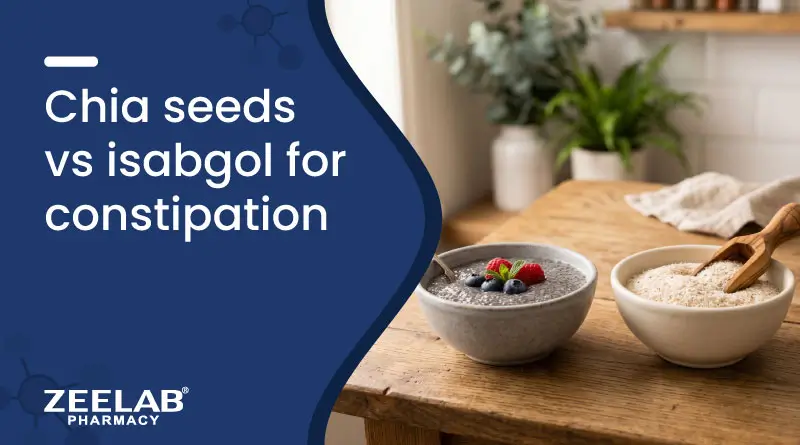
Constipation is among the most common digestive health issues, and the first step towards better bowel health is increasing dietary fibre intake.
Chia seeds and isabgol are two popular natural sources of fibre. Both help in regular bowel movement; they differ in terms of source, nutritional value, fibre composition and time of relief.
This guide compares chia seeds vs isabgol in detail to help you better understand and make an informed decision about which one is better suited for your needs.
Chia Seeds vs Isabgol – A Quick Comparison Table
Here is a quick comparison table of chia seeds vs isabgol to give you an idea about their differences or similarities.
|
Feature |
Chia Seeds |
Isabgol |
|
Source |
It is obtained from the seeds of Salvia hispanica |
It is obtained from the husk of Plantago ovata seeds |
|
Soluble Fibre |
High |
Very high |
|
Insoluble Fibre |
Moderate |
Low |
|
Time to Show Effect |
Within 1-2 days |
Within 12 - 24 hours |
|
Best For |
Long-term digestive health and overall nutrition |
Quick relief from occasional constipation |
|
Taste |
Mild, nutty |
Nearly tasteless |
|
Texture |
Soft, jelly-like after soaking |
Thick gel when mixed with water |
What are Chia Seeds and Isabgol?
Chia seeds and Isabgol are both natural laxatives used to relieve constipation, while they may seem similar, they are different in terms of their source, nutritional profile and the way they work in the body.
What are Chia Seeds?
Chia seeds are small, black or white, edible seeds from the Salvia hispanica plant. They absorb several times their weight in water and form a gel-like coating that helps soften stools. This allows a smoother movement of faeces.
What is Isabgol?
Isabgol or Psyllium husk is obtained from the seeds of a plant called Plantago ovata. It is a natural fibre and is used to treat constipation. Isabgol is known for its high soluble fibre content and is often used as a natural laxative to help promote regular bowel movements.
Also read: How to Use Isabgol (Psyllium Husk) for Constipation
Are Chia Seeds and Isabgol the Same?
No. Chia seeds and isabgol are two different things. They come from different plants and have different nutritional profiles.
Chia seeds are a source of protein, omega-3 fatty acids, some essential nutrients and both soluble and insoluble fibre.
Isabgol is mostly a soluble fibre and is used mainly for the purpose of promoting regularity of the bowel and relieving constipation.
How Do Chia Seeds and Isabgol Work for Constipation?
Chia seeds and isabgol are two popular foods with natural fibres that can boost your digestive health and help with constipation. This detailed comparison of chia seeds and isabgol will help you to decide which one is more appropriate for your digestive needs.
Both are used to treat constipation, but they work a little differently.
How chia seeds work in the gut?
When taken with plenty of water or soaked in water, chia seeds absorb liquid and form a gel. The gel is a combination of soluble and insoluble fibre, which adds to the weight of stools, helps the stool retain water and promotes healthy bowel transit. Over time, this can help to make stools easier to pass.
How does Isabgol work in the intestine?
Isabgol is mainly made up of soluble fibre, which absorbs water easily and forms a thick gel in the intestine.
The gel helps increase stool bulk, soften hard stools, and encourage natural bowel movements, helping waste move more comfortably through the digestive tract.
Chia Seeds vs Isabgol: Which Works Faster for Constipation?
If the main objective is to relieve constipation immediately, then Isabgol is a better choice. Most people get relief in 12 to 24 hours, depending on hydration and the severity of constipation.
Chia seeds tend to take a little longer to work. They are a healthy, whole food, not a laxative that works by adding bulk. It may take 1 to 3 days of regular use before they improve the regularity of the bowel.
Isabgol is generally the better choice for fast relief of constipation. Chia seeds, however, offer additional nutritional benefits and help maintain regular bowel movements.
Also read: Natural Remedies and Supplements for Constipation Relief
Chia Seeds vs Isabgol: Nutritional Comparison
Chia seeds have more nutritional value than isabgol. Here is a nutritional breakdown to help you better understand the difference between the two:
|
Nutrient (Approx.) |
Chia Seeds (per 100 g) |
Isabgol (per 100 g) |
|
Calories |
490 kcal |
375 kcal |
|
Dietary Fibre |
34 g |
85 g |
|
Protein |
17 g |
2-3 g |
|
Omega-3 Fatty Acids |
17–18 g |
less than 0.5 g |
|
Calcium |
631 mg |
80 - 200 mg |
|
Magnesium |
335 mg |
300 mg |
|
Iron |
7.7 mg |
1.5 - 1.8 mg |
Chia Seeds or Isabgol: Which One Should You Choose?
What is best depends on your health goals.
Choose Isabgol if:
- You need quick relief from occasional constipation.
- Your doctor suggests taking a bulk-forming fibre supplement.
- You need a low-calorie source of fibre.
- Your main goal is better bowel regularity.
Choose Chia Seeds If:
- You want fibre, protein, omega-3 fats and minerals.
- You want to improve your general diet.
- You want ongoing digestive support.
Can you take Chia seeds and Isabgol together?
Yes, they can generally be taken together if well tolerated and if you drink enough water throughout the day. They both absorb a lot of water.
So if you mix both and you are not drinking enough fluids, you could be more susceptible to bloating or digestive upset.
Possible Side Effects of Chia Seeds and Isabgol
Since chia seeds and isabgol are both natural alternatives, they have fewer side effects than synthetic alternatives. Excess consumption may, however, cause certain side effects:
|
Side Effect |
Chia Seeds |
Isabgol |
|
Bloating |
May occur if fibre intake is increased suddenly |
Mild bloating may occur initially |
|
Gas |
May occur during the initial days of use |
May occur during the initial days of use |
|
Feeling of Fullness |
May occur after consuming large amounts |
Common due to its bulk-forming action |
|
Abdominal Discomfort |
Possible if consumed in excess or without enough water |
May occur if taken without adequate water |
Safety Tips Before Taking Chia Seeds or Isabgol
Even though chia seeds and isabgol are natural alternatives, you must follow certain safety advice to avoid/ prevent any mishap.
- Take chia seeds and isabgol with plenty of water.
- Do not take either of these products dry, as they absorb water and could lead to a choking hazard.
- If you are new to consuming fibre, start slowly and increase fibre gradually to minimise bloating and gas.
- Do not use if you have difficulty swallowing or intestinal blockage; consult a health care professional.
- Keep hydrated throughout the day to ensure the fibre is effective.
- If you do not get rid of the constipation or it becomes worse with regular use, seek medical advice.
Whatever you decide, remember that fibre works best when combined with enough water, regular exercise and a balanced diet.
Conclusion
Both chia seeds and isabgol are excellent natural sources of fibre that can help you get relief from constipation and also boost your gut health. However, they serve slightly different purposes.
Isabgol is generally the preferred choice for quicker relief from occasional constipation due to its high soluble fibre content and bulk-forming action.
Chia seeds, on the other hand, also contain fibre along with protein, omega-3 fatty acids and essential minerals, making them a better option for long-term digestive and overall nutritional support.
The best option for you will depend on what you need and what your health goals are. Whichever option you choose, to get the best results, drink plenty of water, increase your fibre gradually, and eat a balanced diet together with regular physical activity.
Frequently Asked Questions (FAQs)
Ans.No, Isabgol and chia seeds are different. Isabgol is a fibre supplement mainly for constipation relief, while chia seeds are nutrient-rich seeds that support digestion, along with providing additional health benefits.
Ans.Chia seeds are better for long-term digestive health, while Isabgol works faster for quick relief. The choice depends on whether you need gradual improvement or immediate bowel movement support.
Ans.Chia seeds do not “cure” constipation but help manage it effectively. Their high fibre content absorbs water, softens stool, and supports regular bowel movements when taken consistently with adequate hydration.
Ans.Yes, Isabgol is widely used to relieve constipation. It acts as a bulk-forming laxative, absorbing water in the intestines and making stool softer, which helps ease bowel movements and provide quicker relief.
Ans.Typically, 1–2 tablespoons per day are recommended. Beginners should start with a smaller amount and gradually increase while maintaining adequate water intake.
Ans.Isabgol can be used daily if taken in a proper dosage with adequate water. However, long-term use should be monitored to avoid dependency or reduced natural bowel function.
Ans.Isabgol is usually mixed with a glass of milk or water and consumed immediately before it thickens. It should be followed by another glass of water to improve effectiveness and prevent discomfort.
Ans.Both are generally safe in moderate amounts, but pregnant women should consult a doctor before regular use to ensure proper dosage and avoid any complications.
Ans.Isabgol is generally taken once or twice daily, depending on severity and individual response. It’s important to follow recommended dosage guidelines and avoid overuse to prevent dependency or digestive discomfort.
Ans.Chia seeds usually provide gradual relief rather than immediate results. With regular intake and proper hydration, they may improve bowel movements within a few days by supporting digestion and stool formation.
Ans.Yes, they can be used together, but not at the same time. Take chia seeds during the day and Isabgol at night to avoid excess fibre intake and improve overall digestive balance.
Recent Blogs






Disclaimer : Zeelab Pharmacy provides health information for knowledge only. Do not self-medicate. Always consult a qualified doctor before starting, stopping, or changing any medicine or treatment.


₹ 0
0
Items added
Quick Links
Categories
Our Policies

Our Socials


Subscribe

2026 Copyright By © Zeelab Pharmacy Private Limited. All Rights Reserved
Our Payment Partners

 Added!