

Selenium for Hair Loss: Benefits, Side Effects, Dosage & Does It Really Work?
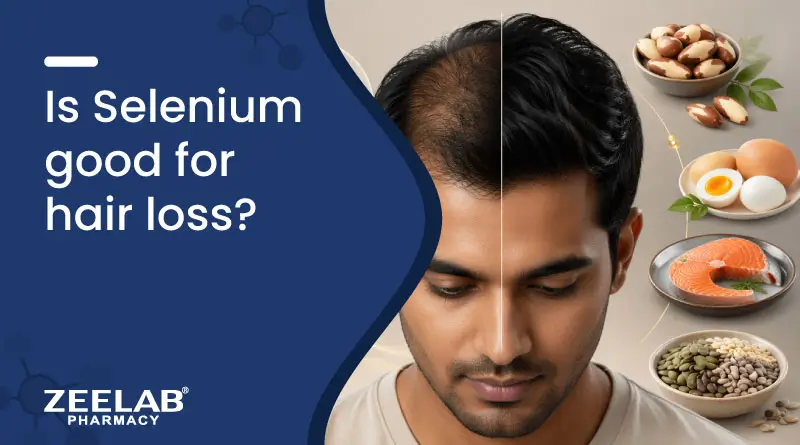
Hair loss has become a common problem nowadays, and no wonder anyone can get distressed by seeing fallen hair strands everywhere.
One of the main reasons behind hair loss is the deficiency of particular nutrients in the diet, one such being Selenium.
Many are not well-informed about the benefits this trace mineral, selenium, can provide to their hair, and that is the exact purpose of this blog.
Throughout this blog, we will discuss the role of selenium in hair health, signs through which its deficiency can be identified, how you can overcome it, and why you should be mindful of an overdose.
What is Selenium?
Selenium is a trace mineral that our body requires in very small amounts. It is responsible for producing special proteins called selenoproteins, which are important for protecting cells against damage and also perform various functions within the body.
The main functions of selenium are:
- Antioxidant function
- Hormone metabolism
- Immune support
- Sperm motility
Despite selenium being an important mineral, it should be noted that an abundance of selenium does not have any additional benefits and can be harmful.
How Selenium Supports Healthy Hair Growth
This section will provide you with a detailed explanation of how selenium can affect your hair health.
Protects Hair Follicles from Oxidative Stress
Our hair follicles are always in contact with free radicals that may damage cells. Selenium helps in:
- Antioxidant defense
- Oxidative stress reduction
- Prevention of cell damage in hair follicles
- A better environment for hair development
Supports Healthy Thyroid Function
Healthy thyroid hormones are also important if you want normal hair growth. Selenium does the following for hair:
- Conversion of inactive T4 to active T3
- Normal functioning of the thyroid gland
- Prevention of hair loss due to thyroid
- Recovery from telogen effluvium due to thyroid conditions
Also Read: Best Foods for Thyroid Patients
Supports the Hair Growth Cycle
Naturally, there are three stages of hair growth:
- Anagen - Active growth phase
- Catagen - Transition phase
- Telogen - Resting and shedding phase
Both the deficiency and excess of selenium can disturb your natural cycle and cause hair shedding.
What Does Research Say About Selenium for Hair Loss?
The answer to this question is simple. Selenium can only promote hair growth when there is a true deficiency of this nutrient in the body.
Supplement benefits are not seen in people who already have normal selenium levels in the body.
What Research Suggests
Studies have shown that selenium can help to achieve its goals through:
- The correction of selenium deficiency
- Antioxidant protection
- Normal thyroid function
- Protection of hair follicles against oxidative damage
What Are the Limitations of Current Research?
- There is little research conducted on humans.
- The research conducted on animals looks promising, but cannot be generalised to humans.
What Research Does NOT Prove
None of the research done so far proves that selenium:
- Is a miracle hair-growth supplement
- Stops the common pattern of hair loss
- Improves hair growth in healthy people with normal selenium levels
Many commercial hair supplements include selenium even when it may not be needed.
Who is Most Likely to Benefit from Selenium?
It is not proven that every person can benefit from taking selenium. Only a certain number of people can see improvement in hair loss by taking selenium supplements; these include:
- Confirmed selenium deficiency
- Malnutrition
- Digestive disorders affecting absorption
- Long-term parenteral (IV) nutrition
- Certain thyroid conditions
- Medically diagnosed nutritional deficiencies
Selenium deficiency is quite rare in healthy people; hence, they do not require selenium supplements for treating hair loss.
Signs Your Hair Loss May Be Caused by Selenium Deficiency
If you are suffering from abnormal hair loss, there can be many reasons behind it. Assuming that it is due to selenium deficiency can never lead us to a solution.
Before you take any further steps, you need to confirm the real reason. If hair loss is due to a lack of selenium, you might see the following signs:
- Persistent fatigue
- Excessive hair shedding
- Brittle nails
- Frequent infections
- Digestive disorders
- Thyroid disease
- Poor or highly restrictive diet
Can Too Much Selenium Cause Hair Loss?
Yes, in fact, hair loss due to excessive selenium levels is much more common and well-documented than hair loss due to its insufficiency.
When there is too much selenium in the body, it leads to selenium toxicity, or selenosis. To avoid it, make sure you don’t take more than 400 mcg of selenium per day.
Symptoms of Selenium Toxicity:
- Garlic-like breath
- Diffuse hair shedding
- Brittle nails and their discolouration
- Metallic taste
- Nausea
- Fatigue
- Digestive problems
Common Causes of Selenium Toxicity
- High-dose selenium supplements
- Taking multiple multivitamins
- Eating excessive amounts of Brazil nuts
- Incorrect supplement dosing
How Much Selenium Do You Need Per Day?
In the above sections, it has been made clear that a lack of selenium as well as an excess of it can cause hair loss. Here is a simple guide on how much you should be taking.
|
Group |
India (ICMR) |
US (NIH) |
|
Adult Men |
40 mcg |
55 mcg |
|
Adult Women |
40 mcg |
55 mcg |
|
Pregnancy |
Follow ICMR guidance |
60 mcg |
|
Breastfeeding |
Follow ICMR guidance |
70 mcg |
|
Upper Safe Limit |
400 mcg |
400 mcg |
Best Selenium-Rich Foods for Hair Growth
To treat nutrient deficiencies, the best and easiest solution is to include natural foods in your diet. Some of the foods high in selenium are:
|
Food |
Selenium Content |
Notes |
|
Brazil nuts |
Extremely high |
Eat sparingly |
|
Tuna |
Rich source |
Good seafood option |
|
Sardines |
Rich source |
Nutrient-dense |
|
Eggs |
Good source |
Easy everyday choice |
|
Chicken |
Good source |
Lean protein |
|
Lentils |
Plant source |
Suitable for vegetarians |
|
Whole wheat |
Everyday source |
Easy to include |
|
Sunflower seeds |
Good plant source |
Healthy snack |
|
Garlic & onions |
Modest source |
Adds small amounts |
Effective Ways to Increase Selenium Naturally
Taking supplements is an easy option in comparison to natural dietary methods. To make things easy for you, we have made simple and practical meal ideas that you can follow.
|
Meal |
Ideas |
|
Breakfast |
Eggs + whole wheat toast |
|
Lunch |
Dal + brown rice + vegetables |
|
Dinner |
Chicken or fish + whole grains |
|
Snacks |
Sunflower seeds or pumpkin seeds |
Should You Take Selenium Supplements for Hair Loss?
Well, not everyone should consider using selenium supplements; they are appropriate only when you see selenium deficiency symptoms and are recommended by a healthcare professional.
Before taking supplements:
- Confirm whether your multi-vitamin already contains selenium.
- Avoid using more than one source of selenium supplement.
- Do not treat hair loss problems with selenium without consulting a doctor.
Also Read: Which Vitamin is Good for Hair Growth? Best Vitamins for Strong & Healthy Hair
How Long Does Selenium Take to Work?
When you are facing hair loss due to low selenium, do not expect quick results even if you take supplements and include natural selenium-rich foods in your diet. Keep in mind:
- It only works if a deficiency exists.
- Hair grows slowly.
- Visible improvement may take 3 to 6 months.
- Taking higher doses will not speed up hair growth.
Myths vs Facts About Selenium for Hair
Several myths about Selenium for hair exist around us. Instead of believing everything we hear, look out for real facts.
|
Myth |
Fact |
|
More selenium grows more hair |
Excess selenium can cause hair loss |
|
Selenium cures hair fall |
Hair loss has many possible causes |
|
Everyone needs supplements |
Most people get enough from food |
|
Natural sources are always safe |
Brazil nuts can exceed safe intake if eaten excessively |
Who Should Avoid Selenium Supplements?
Selenium supplements should only be taken when recommended by a healthcare professional. They may not be suitable for:
- People are already taking multivitamins containing selenium
- People who regularly eat Brazil nuts
- People with kidney disease (consult a doctor first)
- Children (unless prescribed by a doctor)
- Pregnant or breastfeeding women (only on medical advice)
Possible Side Effects of Selenium Supplements
Taking too much selenium may cause:
- Nausea and stomach upset
- Metallic taste in the mouth
- Garlic-like breath
- Hair loss and brittle nails
- Selenium toxicity (selenosis) with long-term excessive intake
When Should You See a Doctor?
Losing 50 to 100 strands of hair every day is normal, but when this number exceeds, it raises questions about something serious. You should go and consult a doctor in the following cases:
- Sudden hair loss
- Patchy hair loss
- Hair shedding lasting several months
- Signs of thyroid problems
- Possible nutrient deficiencies
With an accurate diagnosis, the root cause of hair loss can be determined, and it will be clear if selenium is required or not.
Also Read: Top Reasons for Sudden Hair Fall
Conclusion
Overall, selenium can help manage hair loss only when the body is deficient; taking selenium without a deficiency won’t promote hair growth, but it can worsen the situation.
It is good to avoid self-medication and go to a doctor to find the real cause of your hair loss and its treatment.
If a lack of selenium in the body is confirmed, you can take supplements or go for natural food sources like Brazil nuts, tuna, sardines, eggs, etc.
Frequently Asked Questions (FAQs)
Ans.Selenium may support healthy hair only if you have a confirmed selenium deficiency. Current evidence does not show that selenium supplements improve hair growth in people with normal selenium levels.
Ans.Yes. While taking selenium for hair loss, be considerate because too much of it can cause diffuse hair shedding, brittle nails, and other symptoms of selenium toxicity (selenosis). The risk increases when multiple selenium-containing supplements are taken together.
Ans.Early signs of selenium deficiency may include fatigue, muscle weakness, frequent infections, brittle nails, and increased hair shedding. A blood test is needed to confirm selenium deficiency.
Ans.Most adults' recommended daily selenium intake is 40 to 55 mcg (µg). The upper safe limit is 400 mcg per day. Avoid exceeding this amount unless advised by a healthcare professional.
Ans.Brazil nuts are the richest source of selenium. Other good sources include tuna, sardines, eggs, chicken, whole wheat, lentils, sunflower seeds, garlic, and onions.
Ans.Neither is better for everyone. Selenium helps mainly in selenium deficiency, while biotin helps in biotin deficiency. Both have limited evidence for improving hair growth in healthy individuals.
Ans.Yes, selenium and biotin can usually be taken together if recommended. However, avoid exceeding the recommended selenium intake, especially if your multivitamin already contains selenium.
Ans.If hair loss is caused by selenium deficiency, noticeable improvement may take 3 to 6 months. Hair grows slowly, and taking higher doses will not speed up results.
Ans.No. Selenium deficiency is uncommon in India among people eating a balanced diet. It is more likely in individuals with malabsorption disorders, severe nutritional deficiencies, or long-term IV nutrition.
Ans.Selenium may help thyroid-related hair loss if a selenium deficiency affects thyroid hormone function. It supports the conversion of T4 to T3, but supplements should only be taken on medical advice.
Ans.Selenium is not a proven hair-regrowth treatment. It may improve hair health only when hair loss is linked to a confirmed selenium deficiency, not common types of hair loss.
Ans.Yes. Eating too many Brazil nuts regularly can lead to excess selenium intake, which may cause hair shedding and other symptoms of selenium toxicity. They should be eaten in moderation.
Ans.No. There is no strong evidence that selenium helps with male pattern baldness. This condition is mainly caused by genetics and hormones, not selenium deficiency.
Ans.Selenium may help female hair loss only if a confirmed selenium deficiency is the underlying cause. It is not an effective treatment for most cases of female hair thinning or hair fall.
Recent Blogs






Disclaimer : Zeelab Pharmacy provides health information for knowledge only. Do not self-medicate. Always consult a qualified doctor before starting, stopping, or changing any medicine or treatment.


₹ 0
0
Items added
Quick Links
Categories
Our Policies

Our Socials


Subscribe

2026 Copyright By © Zeelab Pharmacy Private Limited. All Rights Reserved
Our Payment Partners

 Added!