

Smart Medicine Comparison
Recommended Substitute
You Searched

Clopiday AS 150mg/75mg Tablet
51% More Savings
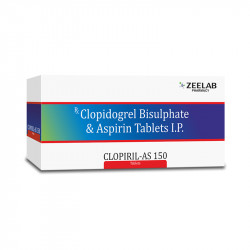
Why Choose our Clopiril AS 150 Antiplatelet Tablet ?
Save ₹ 28 - Enjoy up to 51% More Savings
Same Salt, Dosage & Strength as Clopiday AS 150mg/75mg Tablet
Crafted in a WHO-GMP Certified Facility
President Award Winner - Trusted by Millions


Detail Comparison
| Parameter | Clopiday AS 150mg/75mg Tablet | Clopiril AS 150 Antiplatelet Tablet |
|---|---|---|
| Composition | Clopidogrel Bisulphate 75 mg + Aspirin 150 mg Tablets | Aspirin (150mg) + Clopidogrel (75mg) |
| Quantity | 10 tablets | 10 Tablets In 1 Strip |
| Price | ₹ 55 High Price |
₹ 27 Save 51% |
| Prescription required | Yes | Yes |
Download India's most affordable pharmacy app
- Compare with medicine prices
- Save upto 90% on your medicine bills
DESCRIPTION:
Clopiday AS 150mg/75mg Tablet is a combination medication primarily prescribed to prevent serious cardiovascular events. It belongs to a class of drugs known as antiplatelets or blood thinners. By combining two active ingredients, Clopidogrel and Aspirin, this tablet provides a dual-action approach to cardiovascular health. It is commonly prescribed for individuals who have recently suffered a heart attack, stroke, or have been diagnosed with unstable angina. This medicine is crucial for maintaining smooth blood flow through the arteries, especially in patients with stents or those at high risk of developing dangerous blood clots.
Uses of Clopiday AS 150mg/75mg Tablet
- Prevention of heart attacks and strokes.
- Treatment of acute coronary syndrome (ACS).
- Management of unstable angina (chest pain).
- Prevention of blood clots in patients who have undergone stent placement.
- Reduction of cardiovascular death risk in high-risk heart patients.
How Clopiday AS 150mg/75mg Tablet Works
This medicine works by preventing platelets—small cells in your blood—from sticking together to form harmful clots. Aspirin works by inhibiting the cyclo-oxygenase enzyme, while Clopidogrel prevents the activation of specific receptors on the platelet surface. Together, they keep your blood flowing smoothly through narrowed or blocked blood vessels. This "dual antiplatelet therapy" is significantly more effective than using either medication alone for specific high-risk heart conditions.
Benefits of Clopiday AS 150mg/75mg Tablet
- Significantly lowers the risk of recurrent heart attacks.
- Reduces the likelihood of needing emergency heart surgeries.
- Prevents the formation of life-threatening clots in newly placed stents.
- Offers a convenient combination of two essential medicines in one tablet.
- Provides long-term protection for patients with chronic heart disease.
How to Take Clopiday AS 150mg/75mg Tablet
You should take this medicine exactly as prescribed by your doctor. It is generally recommended to take the tablet at the same time every day to maintain consistent levels in your bloodstream. Swallow the tablet whole with a glass of water; do not crush or chew it, as this can interfere with the delayed-release mechanism. Taking it with food is often advised to minimize potential stomach upset or irritation caused by the Aspirin component.
Side Effects of Clopiday AS 150mg/75mg Tablet
- Increased tendency to bleed (bruising or nosebleeds).
- Indigestion or heartburn.
- Stomach pain or diarrhea.
- Gastrointestinal bleeding (dark or tarry stools).
- Shortness of breath or allergic reactions (rare).
- Dizziness or headache.
Safety Advice
- Inform your doctor if you have a history of stomach ulcers or bleeding disorders.
- Avoid alcohol consumption, as it can increase the risk of stomach bleeding.
- Stop using the medication temporarily before any scheduled surgery, but only after consulting your cardiologist.
- Consult your doctor if you are pregnant or breastfeeding, as Aspirin may not be suitable.
- Be cautious while using sharp objects (like razors) because the medicine makes you bleed more easily.
Frequently Asked Questions (FAQs)
Q: Can I stop taking Clopiday AS 150mg/75mg Tablet if I feel better?
A: No, you should never stop this medication without consulting your doctor first. Stopping it early can significantly increase your risk of a heart attack or blood clot, especially if you have a stent.
Q: Does this medicine cause more bruising?
A: Yes, because Clopiday AS is a blood thinner, you may bruise more easily or bleed for longer than usual if you get a cut. This is a common effect of the medication.
Q: Should I avoid any specific foods while on this medication?
A: Generally, there are no strict food restrictions, but it is wise to limit alcohol and consult your doctor about consuming large amounts of Vitamin K-rich foods or grapefruit juice.
Q: Is it safe to take ibuprofen with Clopiday AS?
A: No, taking other NSAIDs like ibuprofen or naproxen alongside this medicine can greatly increase your risk of stomach ulcers and bleeding. Always check with your doctor before taking any painkillers.






 Added!