

Himalayan Salt: Benefits, Uses, Side Effects & Is It Better Than Regular Salt?
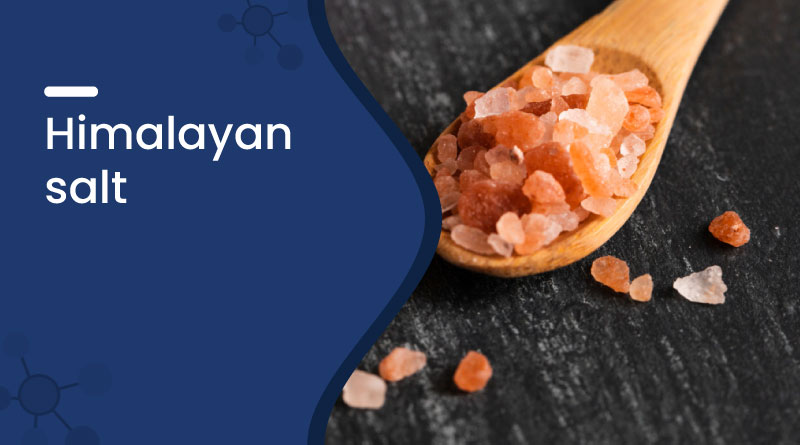
Himalayan salt is gaining popularity for its health benefits and distinct pink colour. Also called "Saindha Namak", it is mostly obtained from ancient Himalayan salt mines found in the Punjab region of Pakistan.
It contains many minerals such as potassium, magnesium, and calcium (the reason for its unique pink colour), in trace amounts.
Being less processed, it is often taken as a natural alternative to regular table salt. But does this natural option also mean healthy or medically superior?
In this blog, we will explore the Himalayan salt benefits and side effects, whether it is really healthy or not, how much you should consume and also compare it with regular table salt.
What is Himalayan Salt?
Himalayan pink salt is a natural rock salt (halite) that comes from ancient sea deposits. It is mainly extracted from the foothills of the Himalayas near the Punjab region in Pakistan.
It is mainly sodium chloride, but also contains small amounts of many different minerals such as potassium, magnesium, calcium, iron, etc., which gives the salt a pink colour.
Where Does Himalayan Pink Salt Come From?
Himalayan pink salt is mainly mined from the Khewra Salt Mine in the Punjab region of Pakistan, one of the world's oldest and largest salt mines.
It was formed millions of years ago from the evaporation of ancient seas, creating large underground rock salt deposits. Its natural pink colour comes from trace minerals such as iron, along with small amounts of potassium, magnesium, and calcium.
Although these minerals give the salt its distinctive appearance, they are present only in very small quantities.
Nutritional Composition of Himalayan Salt
Himalayan pink salt is primarily sodium chloride, just like normal salt, but it does contain small quantities of other minerals.
Nearly 97–99% of Himalayan salt is sodium chloride. The remaining minerals are present only in trace quantities.
Even in small amounts, these minerals could potentially provide a variety of health benefits.
|
Component |
Role in the Body |
|
Sodium Chloride (~97–99%) |
Maintains fluid balance and nerve function |
|
Potassium (Trace amounts) |
Supports muscle and heart function |
|
Magnesium (Trace amounts) |
Helps in muscle relaxation and metabolism |
|
calcium (Trace amounts) |
Important for bone health |
|
Iron (Trace amounts) |
Involved in red blood cell formation |
|
Aid various metabolic processes |
Clinical Note: Himalayan pink salt contains trace minerals. However, these are nutritionally insignificant. Similar to other types of salt, overuse can lead to hypertension and other health problems.
Health Benefits of Himalayan Salt
Along with sodium chloride, Himalayan salt has a lot of other minerals as well (in small quantities). These additional minerals are the reason for benefits like:
- Often tastes saltier than regular salt, hence used in lesser amounts, which may reduce sodium intake.
- Salt inhalation therapy may reduce inflammation and relieve asthma symptoms.
- Using it as a scrub may soften dry and rough skin.
- Contains small amounts of minerals such as magnesium, potassium, and calcium.
Benefits vs Myths of Himalayan Salt
Normally, people think that natural alternatives are always better than processed products. However, many of these beliefs are myths without any backing from science.
|
Myth |
Fact (Scientific Reality) |
|
Himalayan salt is healthier than regular table salt |
Both salts are harmful when overused, as they are mostly sodium chloride. |
|
It detoxifies the body |
No scientific evidence of Himalayan salt having cleansing capabilities. Detoxification of the liver and kidneys happens naturally. |
|
Rich in essential minerals |
There are trace minerals, but in proportions that are too tiny to provide any substantial nutritional benefits |
Common Uses of Himalayan Salt
Himalayan pink salt uses are not limited to cooking. It has a place in skincare and wellness routines. This has helped to make it popular in daily use.
Culinary Uses
It is used for a variety of culinary practices and helps with common everyday food preparation.
- Often used for seasoning food and is commonly added to salads, fruits, and snacks as a finishing salt.
- Salt blocks can also be used for grilling and serving food, adding both flavour and presentation points.
Skincare Uses
Himalayan salt is used for various personal care practices, including skincare.
- It is used in scrubs and bath salts because of its exfoliating ability.
- The salt is also used for the removal of dead skin cells and leaves the skin feeling fresh.
Also Read: Best Natural & Active Ingredients for Glowing Skin
Wellness Trends
This is commonly used in modern wellness practices and a wide range of lifestyle practices, such as:
- In salt lamps, spa therapies, and salt inhalation practices.
- These practices are commonly linked to relaxation and respiratory comfort, although the scientific evidence is limited.
Himalayan Salt vs Regular Salt: Key Differences
The key difference between Himalayan salt and regular salt lies in their processing, content, and uses. Although both are used for similar purposes, there are a few differences which are discussed in the following table:
|
Feature |
Himalayan Pink Salt |
Regular Table Salt |
|
Source |
Mined from ancient rock salt deposits |
Obtained from seawater or underground deposits |
|
Processing |
Minimally processed |
Refined and purified |
|
Composition |
~97–99% sodium chloride + trace minerals |
About 99-100% sodium chloride |
|
Iodine Content |
Low iodine content |
Usually iodised (added iodine) |
|
Texture |
Coarse, crystals |
Fine, uniform |
|
Colour |
Pink (due to trace minerals) |
White |
|
Common Uses |
For food preparation, finishing, and health practices |
For cooking and food preparation |
|
Health Perspective |
No particular health benefit is associated with this salt |
Prevents iodine deficiency when iodised |
Side Effects of Himalayan Salt
Though Himalayan pink salt is considered to be a natural substitute, improper or excessive use can cause some disadvantages such as:
- Risk of high blood pressure and heart problems due to excessive intake.
- Using only Himalayan salt can cause iodine deficiency, affecting the thyroid gland.
- May disrupt electrolyte balance in the body.
- Being less refined, it may contain small amounts of heavy metals, like lead or arsenic.
Risks of Replacing Iodised Salt with Himalayan Salt
Replacing iodised salt with Himalayan salt can be a little risky for your health, as iodised salt is fortified to meet the daily requirement of iodine in the body. It may:
- Cause iodine deficiency, which affects thyroid functioning and metabolism.
- Increase the risk of goitre, tiredness, and defective cognitive development.
- Lead to excessive intake of sodium.
How Much Himalayan Salt Should You Consume Daily?
The WHO recommends that adults should limit their daily salt intake to less than 5 grams a day or one teaspoon. This includes salt from all sources such as food cooked at home, packaged food or food from restaurants.
But if you want to avoid high blood pressure, heart problems or stroke, it is important to stay within this limit. It is also important to remember that moderation is the key regardless of the type of salt used, whether it is Himalayan pink salt or table salt, as all of them are sources of sodium.
Who Should Use Himalayan Salt with Caution?
It is generally safe in small quantities, but there are certain groups of people who should be careful regarding its use:
- People suffering from hypertension or heart conditions
- Patients with kidney disorders
- People at an increased risk of iodine deficiency
- Pregnant and breastfeeding women
- Those on low-sodium diets
How to Use Himalayan Salt Safely
Using Himalayan salt wisely can help maintain a balanced diet. Simple precautions for safe consumption can help you avoid possible health hazards due to excessive salt consumption.
- Use the Himalayan salt in moderation and ensure that the total amount used per day is within the prescribed limit.
- Do not entirely replace the iodised salt unless you are taking iodine through other foods in your diet.
- Ensure that you avoid the added salt in processed foods.
- Incorporate fruits and vegetables into your meals.
- Consult a doctor in case you have diseases such as hypertension and kidney disorders.
When Should You Consult a Doctor?
Certain symptoms or health conditions may require medical advice. Consulting a doctor can help ensure safe salt intake and prevent complications related to sodium or iodine imbalance.
- If you have persistent high blood pressure or difficulty controlling it
- When experiencing symptoms of iodine deficiency, such as fatigue or neck swelling
- If you have existing heart or kidney conditions requiring sodium restriction
- During pregnancy or breastfeeding, for guidance on adequate iodine intake
- If you notice frequent bloating or fluid retention
- Before making major dietary changes, especially replacing iodised salt completely
Conclusion
At last, Himalayan salt is natural and less processed, but it might not be nutritionally superior to regular table salt. It does have additional minerals in it, but in very small amounts, which may not contribute greatly towards better health.
The lack of iodine makes it a bigger concern for many people. Therefore, it is very important to ensure that a balanced approach is maintained.
Frequently Asked Questions (FAQs)
Ans.Himalayan salt is commonly used for cooking, seasoning, and as a finishing salt. It is also used in skincare products, bath salts, and wellness practices like salt lamps and spa therapies.
Ans.Himalayan salt is not significantly better than regular salt. Both mainly contain sodium chloride, and the trace minerals in Himalayan salt are too small to provide major health benefits.
Ans.Himalayan salt contains very little iodine compared to iodised salt. Relying only on it may increase the risk of iodine deficiency over time.
Ans.Yes, Himalayan salt is commonly used for cooking, seasoning, and as a finishing salt. It can also be used on salt blocks for grilling and serving food. But completely switching to this is not recommended due to the risk of iodine deficiency.
Ans.Himalayan salt helps maintain electrolyte balance, supports hydration, and aids muscle function due to its sodium content. However, most benefits are similar to those of regular salt, not unique.
Ans.If you have high blood pressure, you should limit all types of salt, including Himalayan salt. Excess sodium intake can worsen hypertension, so it is best to follow your doctor’s dietary advice.
Ans.Excess Himalayan salt may cause high blood pressure, water retention, and increased sodium levels. Regular use without iodised salt may also lead to iodine deficiency.
Ans.Drinking water with Himalayan salt may support hydration in small amounts due to its sodium content. However, regular use is not necessary, and excessive intake may lead to increased sodium levels.
Ans.Himalayan salt contains trace minerals such as potassium, magnesium, calcium, and iron. These minerals contribute to its pink colour but are present in very small amounts.
Ans.Yes, using Himalayan salt exclusively may lead to iodine deficiency because it contains negligible iodine, unlike iodised salt, which is fortified to support thyroid health.
Recent Blogs






Disclaimer : Zeelab Pharmacy provides health information for knowledge only. Do not self-medicate. Always consult a qualified doctor before starting, stopping, or changing any medicine or treatment.


₹ 0
0
Items added
Quick Links
Categories
Our Policies

Our Socials


Subscribe

2026 Copyright By © Zeelab Pharmacy Private Limited. All Rights Reserved
Our Payment Partners

 Added!