

Kojic Acid vs Alpha Arbutin: Which Ingredient Is Better for Dark Spots, Hyperpigmentation & Sensitive Skin?
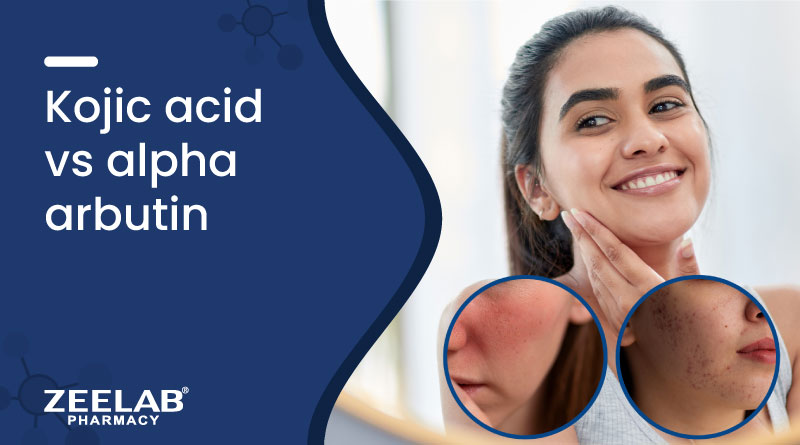
Dark spots, acne marks, and uneven skin are common concerns, especially for people with Indian skin, which tends to produce more melanin. Because of this, products that can lighten skin, like kojic acid and alpha arbutin, have exploded in popularity.
People usually wonder which one is faster, safer, or gentler for sensitive skin. This guide will compare kojic acid and alpha arbutin for treating dark spots, including what they do, bad reactions, how much to use, how long before you see results, how to use them, and if they're okay for sensitive skin.
This guide works for any skin type and mentions Zeelab Pharmacy. We are known for providing affordable, dermatologist-approved pigmentation solutions that really work.
What is Kojic Acid?
Kojic acid, which comes from fungus and fermented rice, may inhibit melanin production. It is a common ingredient in skin care that helps lighten dark spots, such as sun damage, by blocking tyrosinase.
How Kojic Acid Works (Melanin Inhibition Explained Simply)
Kojic acid prevents tyrosinase from working. Tyrosinase is actually a key component that produces melanin. It does this by capturing the copper that tyrosinase requires.
This reduces a lot of discolouration and dark spots stop appearing. Using kojic acid frequently will gradually lighten dark spots and uneven skin tone as it reduces the amount of melanin that forms over time.
Kojic Acid Benefits for Dark Spots & Pigmentation
Kojic Acid brightens skin, fades dark spots, reduces pigmentation, evens skin tone, and gently exfoliates for a clear, glowing complexion. Here are five advantages. Let’s take a closer look at each of them.
- Reduces Dark Spots: It reduces sunspots, acne scars and melasma by reducing melanin production.
- Lightens Hyperpigmentation: Deeply targets uneven pigmentation, helps brighten stubborn patches and improves overall skin tone.
- Prevents Future Darkening: Slows down the formation of melanin, reducing the likelihood of new pigmentation caused by UV exposure.
- Enhances Skin Brightness: Improves dullness by gently exfoliating surface cells, leaving clearer and more radiant skin.
- Supports Tan Removal: Rapidly reduces tanning by preventing pigment build-up and efficiently correcting sun-induced discolouration.
Kojic Acid for Hyperpigmentation & Melasma
Kojic acid helps reduce melanin and can fade dark spots, even those tough ones caused by pigmentation or melasma. Because it can penetrate the skin, it's a popular ingredient in creams and serums. Many people see their dark spots fade after using it regularly for 4–12 weeks, as long as they also use sunscreen.
Kojic Acid Side Effects & Skin Sensitivity
- Kojic acid might cause some irritation, like redness, dryness, or sensitivity, especially if you have sensitive skin.
- Using too much or a high strength can make irritation more likely.
- Additionally, it may break in some products if it is not properly stabilised.
- Always test it on a small area of skin before using it regularly.
Recommended Kojic Acid Percentage (1%–2%)
Creams and serums usually work best when they have 1–2% kojic acid. This amount strikes a good middle ground, ensuring it works effectively without causing too many side effects. If you use a higher concentration of kojic acid, you may get more irritation or other problems, especially if you're not using sunscreen.
What is Alpha Arbutin?
Alpha arbutin is a mild ingredient that can brighten your skin and fade dark spots by reducing melanin. It's a gentler, safer alternative to hydroquinone, so it's good for sensitive skin and works well on pigmentation.
How Alpha Arbutin Works on Melanin
Alpha arbutin is a stable form of hydroquinone. It blocks tyrosinase, which lowers melanin production without hurting skin cells. It's a gentle but strong melanin inhibitor, making it great for everyday use if you're looking for something mild to lighten dark spots without irritating your skin.
Alpha Arbutin Benefits for Sensitive Skin
Alpha Arbutin helps reduce dark spots by reducing melanin formation. It can improve skin tone and make the skin glow. It usually does not irritate the skin. These are five good things to know about it.
- It gently lightens the skin little by little, so it's less likely to irritate stronger things.
- It also helps even out skin tone, even if your skin is sensitive.
- This is a good option if you want to keep your skin looking good over time.
- You can also combine it with niacinamide and hyaluronic acid to make your skin feel softer and more hydrated.
- It can also help fade things like melasma, dark spots, and age spots without being too harsh.
Alpha Arbutin for Hyperpigmentation & Acne Marks
- Alpha Arbutin is great for fading dark spots and is so gentle that it won't irritate sensitive skin.
- It also plays well with other skin-friendly things like niacinamide, vitamin C, or hyaluronic acid to brighten and hydrate. Using them all together can boost your skin's health and appearance, and help those dark spots fade away little by little.
Alpha Arbutin Side Effects & Safety
Alpha Arbutin is generally gentle on the skin and is fine for daily use, even if your skin is sensitive. Still, some people may have mild reactions, mostly when they abuse it or mix it with harsher products.
- Mild Irritation: Rarely causes mild redness or tingling, but is much milder than kojic acid.
- Dryness: Excessive use without balancing moisturisers in your skin care routine can cause mild dryness.
- Sun Sensitivity: Skin's sensitivity to UV damage increases, making daily broad-spectrum sunscreen essential.
- Allergic Reaction: It usually does not cause itching, bumps, or irritation in patches in people with allergies.
- Interaction Sensitivity: Strong products like retinol or AHAs can cause skin problems if used incorrectly.
Recommended Alpha Arbutin Percentage (2%)
If you have really tough dark spots, kojic acid might work better. But if your skin is easily irritated, alpha arbutin is a milder choice.
For treating hyperpigmentation and dark spots, using a 2% alpha arbutin solution is a safe way to go for a long time.
Kojic Acid vs Alpha Arbutin: Key Differences (Comparison Table)
|
Comparison Point |
Kojic Acid |
Alpha Arbutin |
|
How It Works |
Strong tyrosinase inhibitor that blocks melanin production at the root; ideal for stubborn pigmentation. |
Gentle melanin inhibitor that slows pigment formation without irritation; perfect for daily brightening. |
|
Best For |
Stubborn dark spots, melasma, tanning, acne marks, and underarm pigmentation. |
Sensitive skin, mild-to-moderate pigmentation, uneven tone, post-inflammatory marks. |
|
Speed of Results |
Works faster — visible brightening in 3–4 weeks for superficial spots. |
Works gradually — clearer skin in 6–8 weeks with consistent use. |
|
Strength Level |
Strong, brightening active; may irritate sensitive or compromised skin. |
Gentle brightener; safest option for long-term use and beginners. |
|
Safety for Sensitive Skin |
Can irritate, especially with acids or retinol; patch test needed. |
Very safe; minimal irritation and ideal for sensitive or reactive skin. |
|
Effectiveness for Hyperpigmentation |
Highly effective for melasma, deep tanning, and stubborn marks. |
Great for post-inflammatory hyperpigmentation and early pigmentation. |
|
Effectiveness for Dark Spots |
More potent on older, deeper dark spots. |
Works well for newer, surface-level dark spots. |
|
Effectiveness for Acne Marks |
Excellent for red/brown acne marks and uneven tone. |
Good for mild acne marks; pairs well with niacinamide. |
|
Suitable for Indian Skin? |
Yes, but requires careful introduction due to irritation risk. |
Yes, extremely compatible with Indian skin sensitivity patterns. |
|
Irritation Risk |
Medium–high (redness, peeling if overused). |
Very low; safest brightening ingredient. |
|
Daytime Use |
Not always recommended; best used at night with a strong sunscreen. |
Can be used morning and night, very stable. |
|
Long-Term Safety |
Effective but needs breaks to avoid irritation. |
Excellent long-term safety; can be used continuously. |
|
Which Works Faster? |
Kojic acid works faster on stubborn pigmentation. |
Alpha arbutin works slowly but is gentler and safer. |
Kojic Acid vs Alpha Arbutin: Which Works Faster?
When directly comparing kojic acid and alpha arbutin, kojic acid usually lightens skin faster, with results appearing in about 2 to 4 weeks because it's a stronger inhibitor.
Alpha arbutin's results are slower, usually taking 6 to 12 weeks, which makes it safer for skin that's easily irritated.
How Long Do Kojic Acid & Alpha Arbutin Take to Show Results?
Kojic Acid works fast, showing visible brightening in 3-4 weeks, while Alpha Arbutin produces gradual pigmentation reduction in 6-8 weeks.
|
Timeline Stage |
Kojic Acid (Faster Brightening) |
Alpha Arbutin (Gradual Results) |
|
1–2 Weeks |
Early brightness; mild fading of superficial tan and fresh dark spots. |
Subtle tone improvement; hydration boost; minimal spot fading begins. |
|
3–4 Weeks |
Visible reduction in sunspots and pigmentation; stronger glow. |
Gradual fading of mild pigmentation and acne marks. |
|
6 Weeks |
Noticeable improvement in melasma and deeper pigmentation (with SPF). |
Clearer skin tone; softer appearance of dark spots; suitable for sensitive skin. |
|
8 Weeks |
Significant change in overall clarity and stubborn spots. |
Consistent brightening; deeper marks begin to lighten with continued use. |
|
12 Weeks |
Maximum results with routine consistency; best for persistent pigmentation. |
Peak results: very even skin tone with excellent long-term safety. |
Best Ingredient Based on Skin Concerns
Choose ingredients based on concerns:
- Kojic acid for dark spots
- Retinol for scars and ageing
- Niacinamide for soothing
- Vitamin C for radiance.
Best Ingredient for Hyperpigmentation
- For deep and stubborn Pigmentation, Kojic Acid delivers stronger, faster results by directly inhibiting melanin production and targeting long-standing dark spots.
- For mild-to-moderate Pigmentation or sensitive skin, Alpha Arbutin provides a gentle, stable glow with low risk of irritation, making it ideal for beginners and sensitive users.
Best Ingredient for Dark Spots or Acne Marks
- Kojic Acid: A potent melanin inhibitor that targets surface and stubborn dark spots quickly. Works well for post-inflammatory marks, sun spots, and uneven tone, giving visible brightening with consistent use.
- Alpha Arbutin: A gentle, well-tolerated option that gradually reduces pigmentation over time. Ideal for sensitive skin and long-term maintenance to prevent dark spots from returning while improving overall clarity.
Kojic Acid vs Alpha Arbutin for Indian Skin
Indian skin generally has more melanin and responds well to things that slow down melanin production. But, since it can easily cause irritation and the dark spots are likely to return, it is important to use sunscreen with these treatments.
Alpha Arbutin is often a good choice for sensitive Indian skin. Kojic acid can help deal with stubborn dark spots if you also use sun protection.
Kojic Acid vs Alpha Arbutin for Underarm Pigmentation
- Alpha Arbutin: Best for sensitive underarm skin; Provides stable shine with minimal irritation. Safe for daily use and suitable for long-term maintenance of pigmentation-prone areas.
- Kojic Acid: Provides bright light but has a higher risk of irritation in delicate areas. Use at low concentrations and always do a patch test before regular use.
Kojic Acid vs Alpha Arbutin for Tanning
- Kojic Acid: Works fast by strongly inhibiting tyrosinase, helping to reduce tanning and dark spots faster. Best for removing noticeable tan.
- Alpha Arbutin: Provides a gradual glow with excellent skin tolerance, making it ideal for sensitive skin and mild to moderate tanning.
Can You Use Kojic Acid & Alpha Arbutin Together?
Yes, many products combine these two because they are a good match. As such, some serums use 2% kojic acid and 1% alpha arbutin to fade blemishes and make your skin tone look better.
AM Routine
- Cleanser
- Alpha Arbutin Serum
- Moisturiser
- Broad‑spectrum Sunscreen
PM Routine
- Cleanser
- Kojic Acid (2–3×/week if sensitive)
- Moisturiser
Why the combination works
- Kojic Acid Strong Spot Treatment: It deeply inhibits melanin formation, helping to quickly reduce stubborn pigmentation and tanning patches.
- Alpha Arbutin Gentle Melanin Regulator: It prevents new pigmentation, making results more uniform, stable and long-lasting.
- Together: They balance strength and gentleness, delivering fast but controlled shine with minimal irritation.
How to Use These Ingredients Safely
Use kojic acid and alpha arbutin with moisturisers, limit kojic to 2-3 nights weekly, and always apply broad-spectrum sunscreen daily.
- Before you start using this product all over, test it on a small area first.
- Start slowly. Use alpha arbutin every day, and kojic acid 2–3 times a week.
- Don't use strong exfoliating products at the same time as kojic acid.
- Always wear sunscreen that protects against both UVA and UVB rays to avoid sunspots and sensitivity.
Which Is Safer for Long‑Term Use?
- Alpha arbutin: Ideal for long-term maintenance and sensitive skin due to its stable, gentle melanin inhibition.
- Kojic acid: Effective but should be used sparingly and with sunscreen to prevent sensitivity and irritation.
Who Should Avoid Kojic Acid or Alpha Arbutin?
Avoid kojic acid or alpha arbutin if your skin is extremely sensitive, allergy-prone, has open wounds, or if you are pregnant or breastfeeding.
- If your skin is very sensitive, try a small test area first.
- Do not use on open cuts, eczema, or skin flare-ups.
- If you're not using sunscreen, be careful, as it may make your skin more sensitive to the sun.
- If you are pregnant or breastfeeding, talk to a skin doctor before use.
How to Choose the Right Ingredient for Your Skin Type
Choose ingredients that suit your skin type: Kojic acid if you have normal to oily skin, retinol if you are struggling with ageing skin, or alpha arbutin if your skin is sensitive or uneven.
- Sensitive Skin (Alpha Arbutin): This is gentle, reduces dark spots without irritating, and it's great if your skin is easily upset.
- Stubborn Dark Spots (Kojic Acid): This is strong, fades those spots that have been around for ages, like melasma.
- Brightening (Alpha Arbutin): You can use this every day to even out your skin tone and keep new spots from showing up.
- Spot Treatment (Kojic Acid): Use this directly on dark spots for quick, noticeable results.
Best Product Recommendations from Zeelab Pharmacy
Here are some products from Zeelab Pharmacy at affordable prices. Most preferred and dermatologist-approved products, as well as similar affordable ranges, are safe and effective. Additionally, Zeelab Pharmacy products are WHO-GMP, ISO and FDA certified.
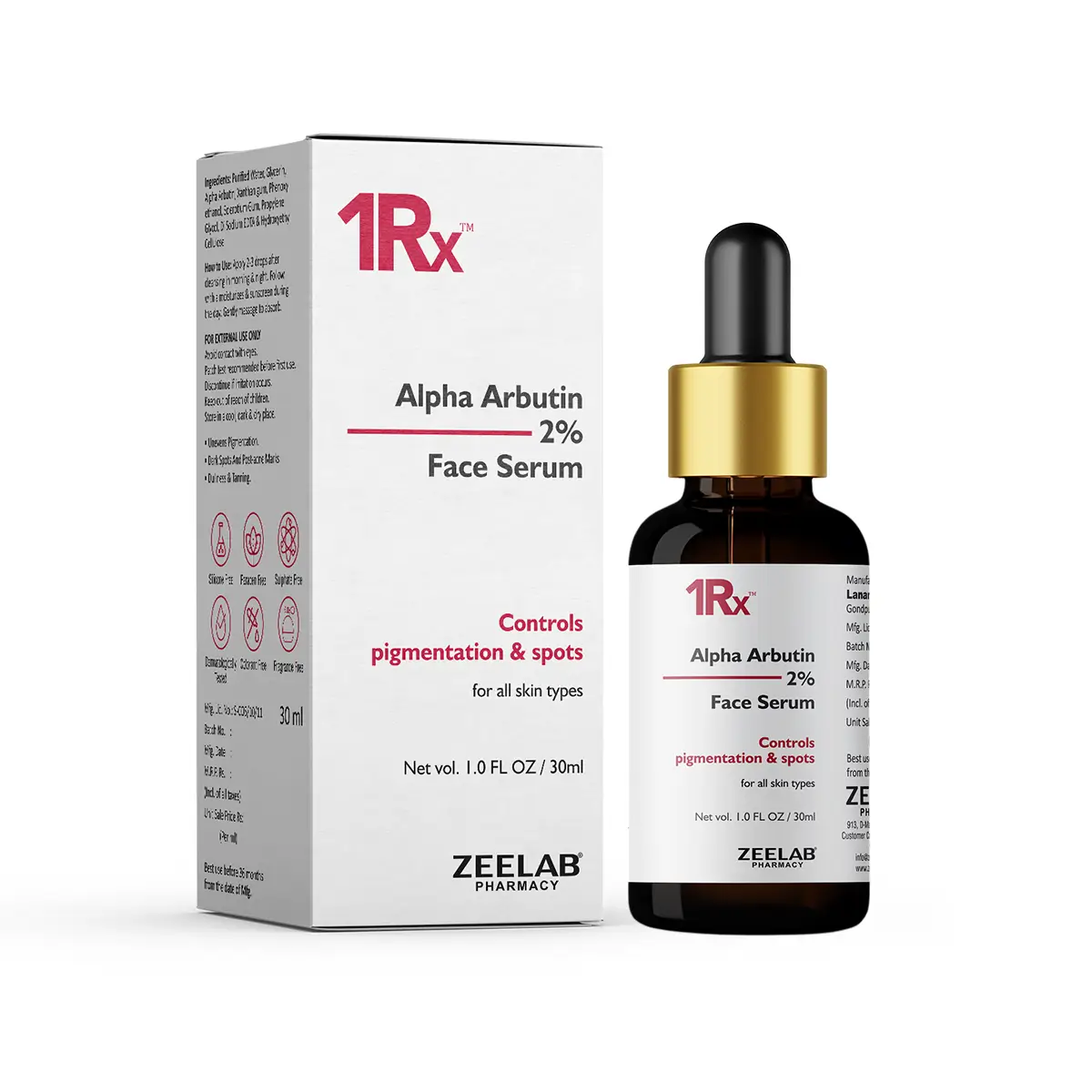
1RX Alpha Arbutin 2% Face Serum 30ml
1RX Alpha Arbutin 2% Serum (30 ml) is basically a skin brightener that helps reduce dark spots, tan lines and uneven skin. It's made to control your skin's colour and boost brightness.
- Composition: Alpha Arbutin (2% w/v)
- What it does: Brightens skin, reduces dark spots, controls melanin, evens tone, and improves overall glow with gentle care.
- How to use: Apply a few drops daily to cleansed skin, followed by moisturiser and sunscreen for best results.
Kojic Acid and Vitamin C Cream
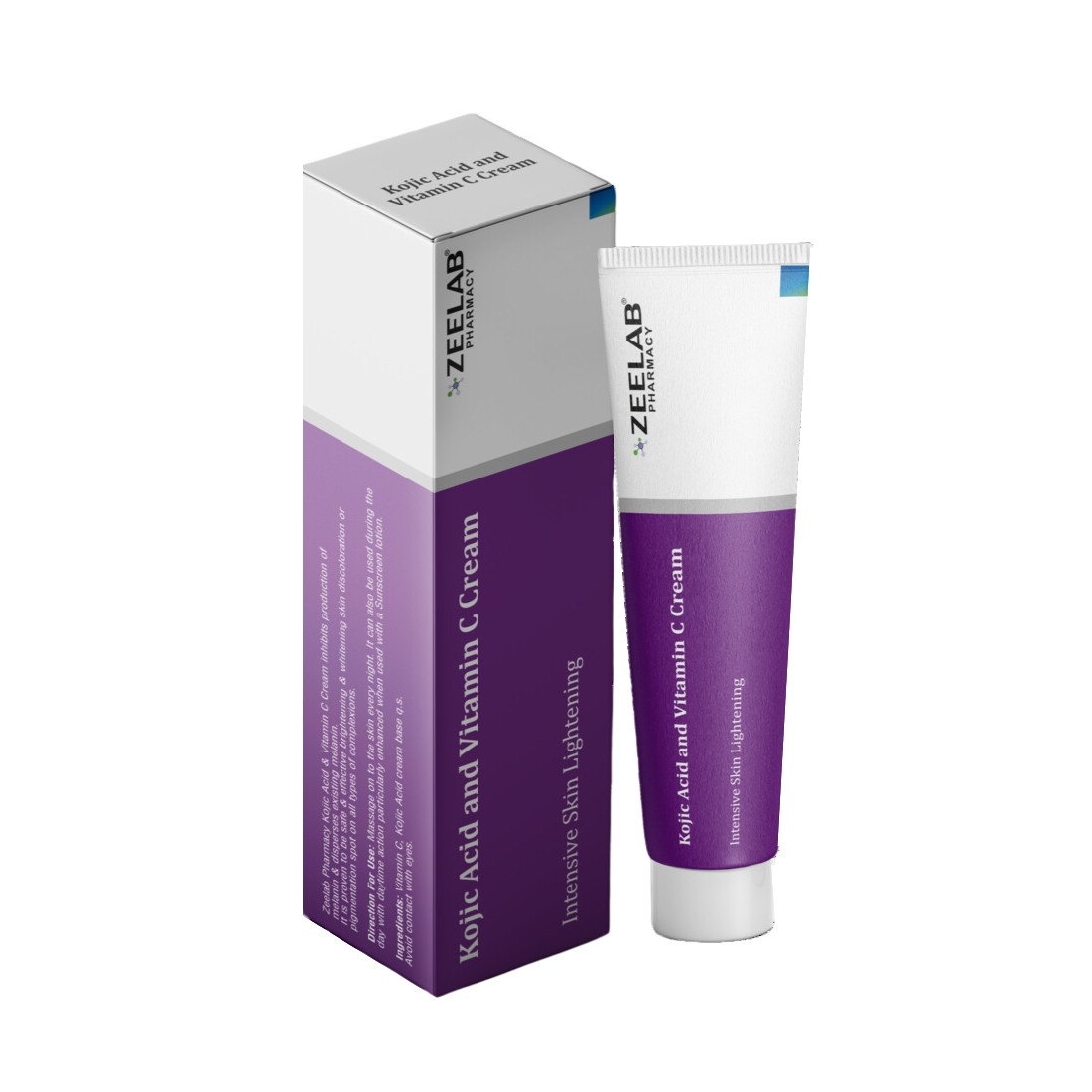
Kojic Acid Cream with Vitamin C - Filters are great, but clear skin is even better. Banish dark spots and blemishes safely with ZEELAB Kojic Acid and Vitamin C Cream For Face, and it helps reduce hyperpigmentation.
- Composition: Kojic Acid 2% & Vitamin C
- What it does: Brightens dark spots, reduces pigmentation, evens skin tone and enhances radiance with antioxidant protection.
- How to use: Apply a thin layer to cleansed skin once daily at night, followed by moisturiser.
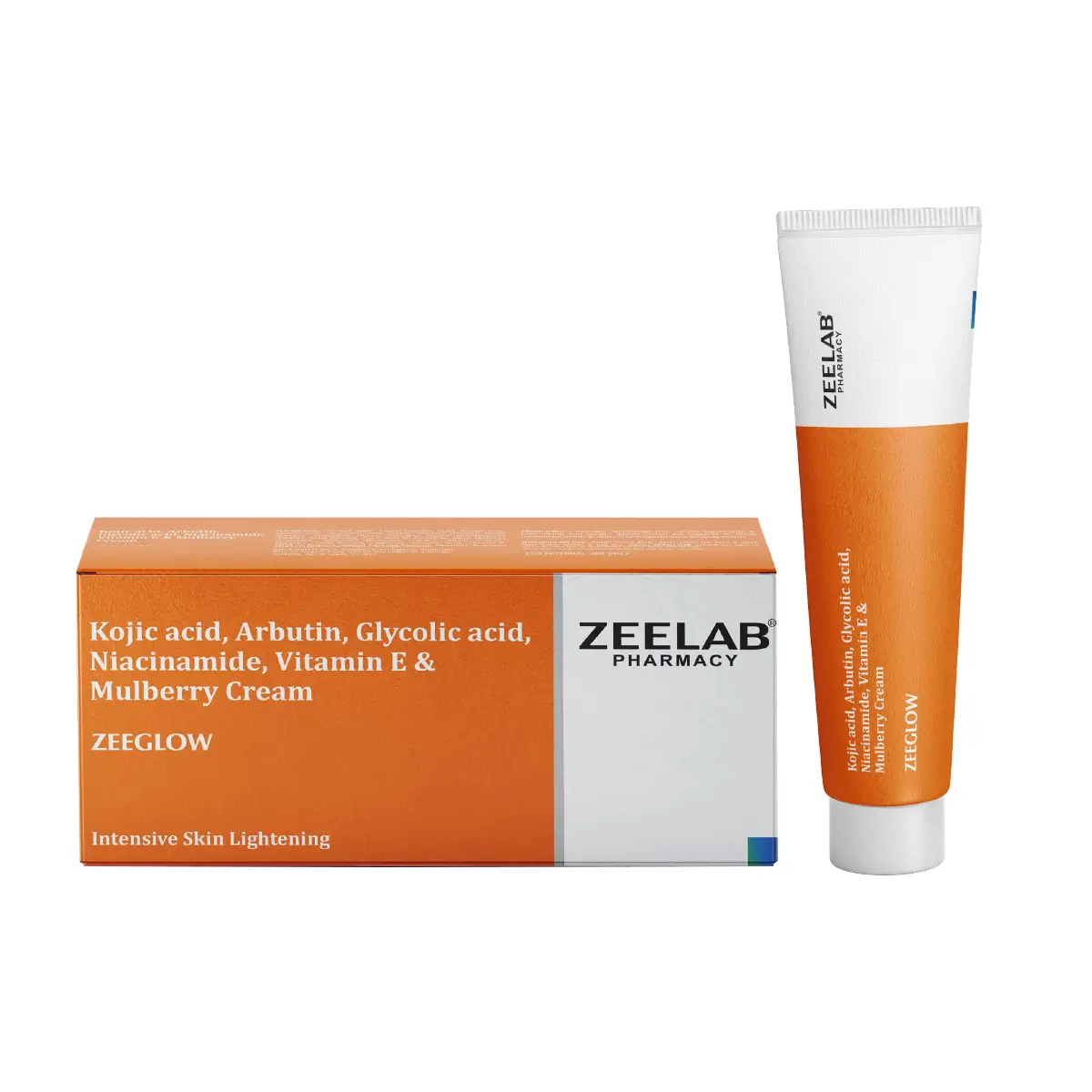
Zeeglow Glycolic Acid, Arbutin and Kojic Acid Cream
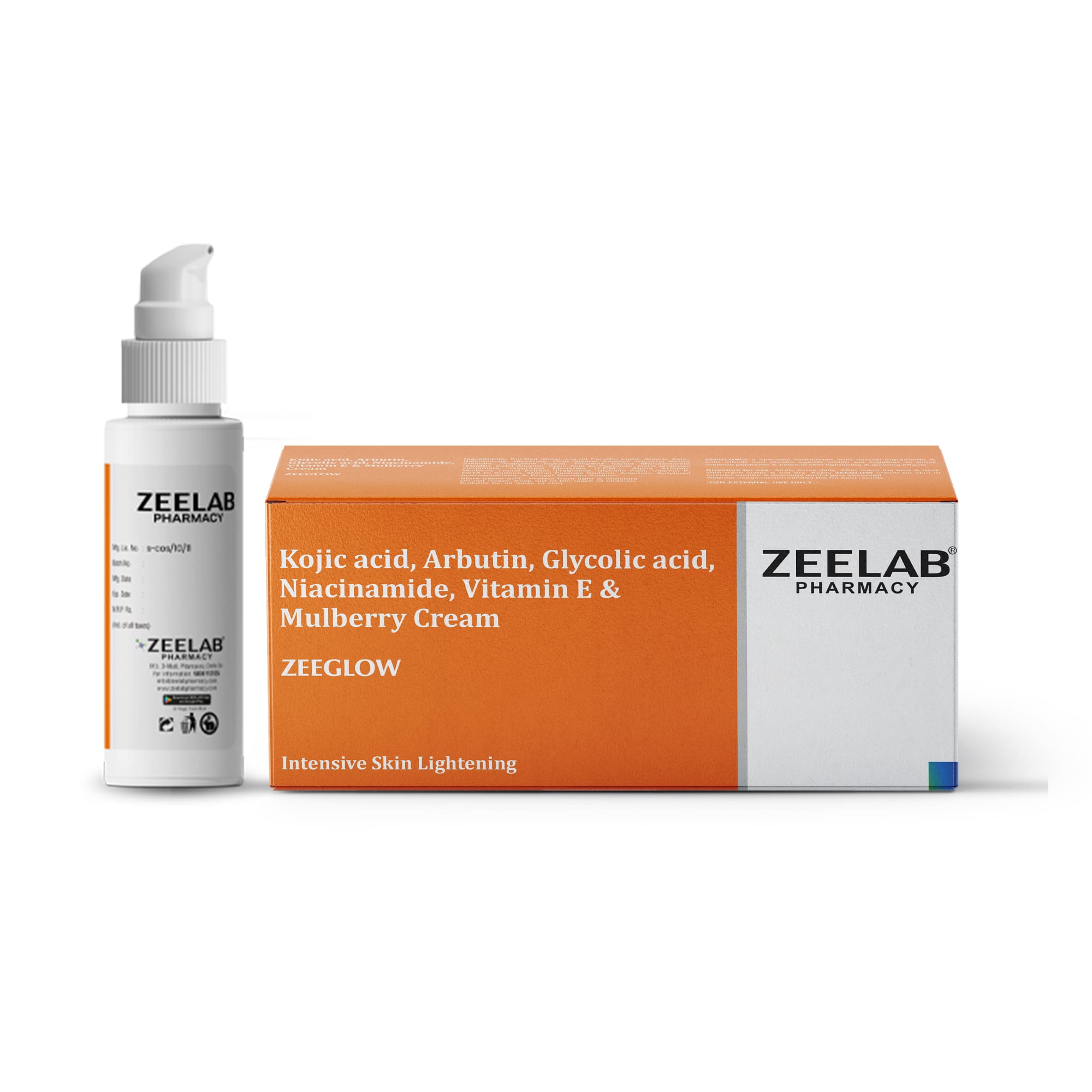
Zeeglow Glycolic Acid, Arbutin & Kojic Acid Dipalmitate Cream is a skincare solution designed to enhance your skin’s natural radiance. This cream combines Glycolic Acid, Arbutin, and Kojic Acid Dipalmitate to help brighten and even out your skin tone.
- Composition: Kojic Acid, Arbutin, Glycolic Acid, Niacinamide, Vitamin E & Mulberry Cream
- What it does: Brightens dark spots, reduces pigmentation, smoothens skin tone, and gently exfoliates for clearer radiance.
- How to use: Apply a thin layer nightly on clean skin; follow with moisturiser and mandatory morning sunscreen.
Conclusion
Kojic acid and alpha arbutin both help with dark spots, but in different ways. Kojic acid is stronger, so it's good for tough, deep spots. Alpha arbutin is milder, so it works well on sensitive skin and for brightening your skin every day.
If you want to fade spots fast, go with kojic acid, & if you want something gentle that you can use all the time, pick alpha arbutin. Either way, you need to use sunscreen and stick with it to see real results that last.
If you want some affordable options that work, check out Zeelab’s pigmentation solutions. They have a Kojic Acid Cream, Alpha Arbutin Serum, and other brightening products to help your skin safely.
Frequently Asked Questions
Q. Which is better: kojic acid or alpha arbutin?
A. It really depends on how strong you need it. Kojic acid is stronger, but alpha arbutin is easier on sensitive skin.
Q. Is kojic acid stronger than alpha arbutin?
A. Yes, kojic acid often shows faster melanin reduction but may irritate sensitive skin.
Q. Does kojic acid work faster than alpha arbutin?
A. Generally, yes, results start quickly, often around 4-6 weeks.
Q. How long does alpha arbutin take to show results?
A. Alpha Arbutin usually shows gradual improvement within 6-12 weeks.
Q. Is alpha arbutin better for sensitive skin?
A. Yes, it is more stable and less irritating, making it ideal for sensitive skin.
Q. Can I use kojic acid and alpha arbutin together?
A. Yes, they can complement each other when used in a safe routine.
Q. Which is safer for long‑term use: kojic acid or alpha arbutin?
A. Alpha arbutin is generally safer for long‑term daily use with lower irritation risk.
Q. Does alpha arbutin help with acne marks?
A. Yes, it helps lighten those dark spots after acne without much irritation, and you can even use it with your favorite moisturizer.
Q. Does alpha arbutin prevent new pigmentation?
A. Yes, if you use it regularly with sunscreen, Alpha Arbutin can help reduce dark spots, tan lines, and uneven skin, as it reduces melanin production.
Q. Is kojic acid effective for treating tanning?
A. Yes, Kojic Acid is great in reducing tan quickly. It actually prevents melanin from forming, which is why it works so well on tan and blemishes.
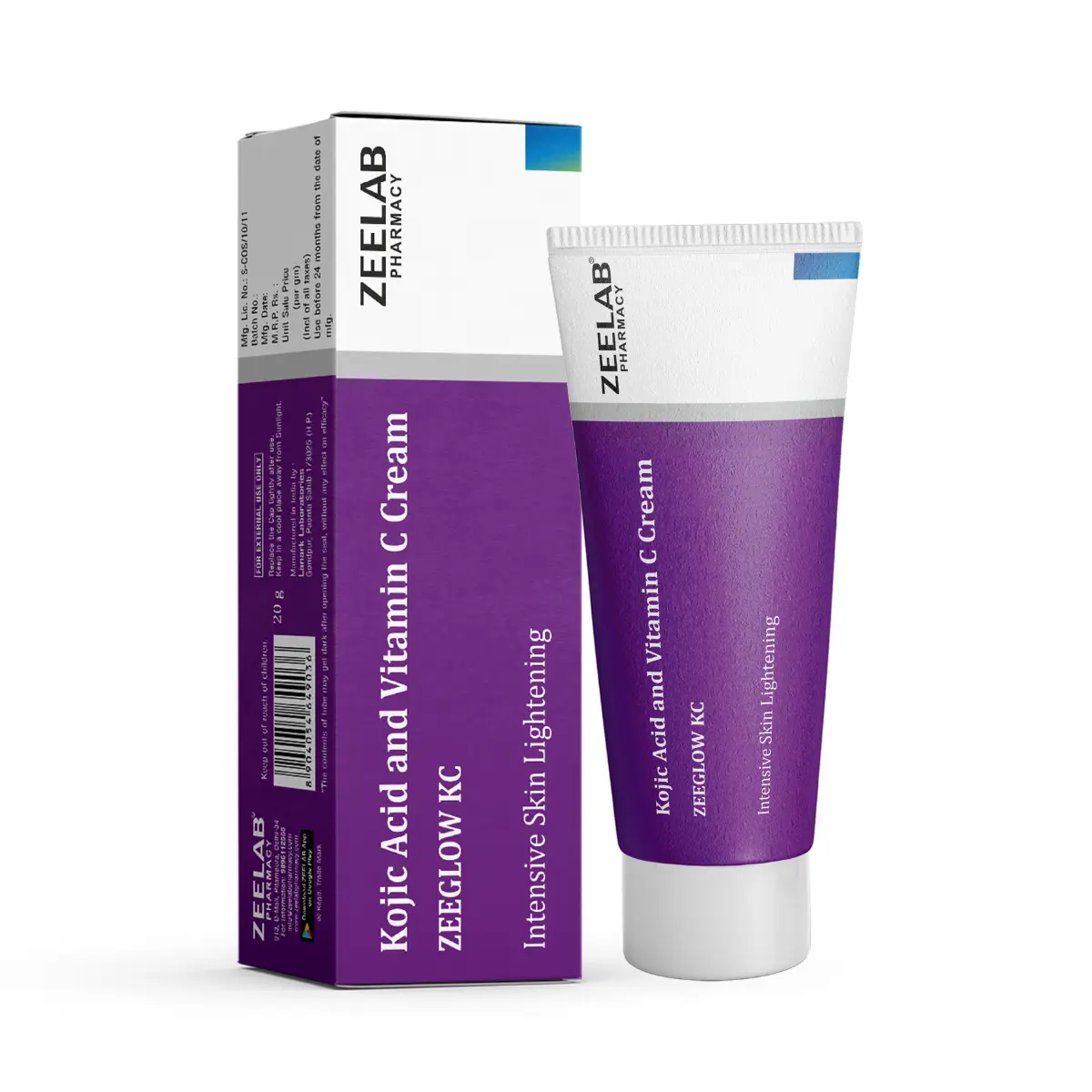
Kojic Acid 2% + Vitamin C
20gm In 1 Tube
Kojic Acid + Arbutin + Glycolic Acid + Niacinamide + Vitamin E + Mulberry
25gm in 1 tube
Alpha Arbutin (2% w/v)
30ml In 1 Bottle
Recent Blogs






Disclaimer : Zeelab Pharmacy provides health information for knowledge only. Do not self-medicate. Always consult a qualified doctor before starting, stopping, or changing any medicine or treatment.
Related Products


₹ 0
0
Items added
Quick Links
Categories
Our Policies

Our Socials


Subscribe

2026 Copyright By © Zeelab Pharmacy Private Limited. All Rights Reserved
Our Payment Partners

 Added!