

Smart Medicine Comparison
Recommended Substitute
You Searched

Mucinac AB Tablet
57.07% More Savings
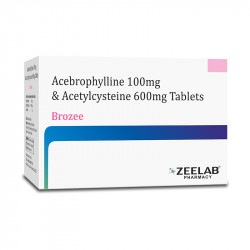
Why Choose our Brozee | Acebrophylline 100mg + Acetylcysteine 600mg Tablet... ?
Save ₹ 131.61 - Enjoy up to 57.07% More Savings
Same Salt, Dosage & Strength as Mucinac AB Tablet
Crafted in a WHO-GMP Certified Facility
President Award Winner - Trusted by Millions


Detail Comparison
| Parameter | Mucinac AB Tablet | Brozee | Acebrophylline 100mg + Acetylcysteine 600mg Tablet... |
|---|---|---|
| Composition | Acebrophylline (100mg) + Acetylcysteine (600mg) | Acebrophylline (100 mg) + Acetylcysteine (600 mg) |
| Quantity | 15 tablets | 10 Tablets In 1 Strip |
| Price | ₹ 230.61 High Price |
₹ 99 Save 57.07% |
| Prescription required | Yes | Yes |
Download India's most affordable pharmacy app
- Compare with medicine prices
- Save upto 90% on your medicine bills
COMPOSITION:
Acebrophylline (100mg) + Acetylcysteine (600mg)DESCRIPTION:
Mucinac AB Tablet is a prescription respiratory medicine containing Acebrophylline 100 mg and Acetylcysteine 600 mg. Mucinac AB Tablet is used to manage respiratory conditions associated with airway narrowing and thick mucus, particularly chronic obstructive pulmonary disease (COPD). It may also be prescribed for conditions such as chronic bronchitis or asthma when mucus buildup and breathing difficulty are present.
Acebrophylline helps relax the airways and regulate mucus, while acetylcysteine thins and loosens mucus (phlegm), making it easier to cough out. Together, they may help reduce symptoms such as cough with mucus, chest congestion, wheezing, and shortness of breath. This medicine is not a rescue treatment for sudden asthma attacks.
Uses of Mucinac AB Tablet
Mucinac AB Tablet is used to manage respiratory conditions associated with airway narrowing, breathing difficulty, and thick or excess mucus.
- Chronic Obstructive Pulmonary Disease (COPD): Helps manage symptoms such as persistent cough, excess mucus, wheezing, and breathing difficulty by improving airflow and mucus clearance.
- Chronic Bronchitis: May help thin thick mucus and make it easier to clear from the airways, reducing chest congestion and productive cough.
- Asthma with excess mucus: May be used as part of a doctor's treatment plan to help manage airway narrowing and mucus buildup. It should not be used for immediate relief during a sudden asthma attack.
- Other respiratory conditions with thick mucus: Your doctor may prescribe this combination when excess or sticky mucus contributes to airway obstruction and difficulty clearing secretions.
Benefits
The benefit of Mucinac AB Tablet is that it helps to improve mucus clearance and may make breathing easier in appropriate respiratory conditions.
- Helps to relax and open narrowed airways.
- Helps to thin and loosen thick phlegm.
- Makes mucus easier to cough out.
- May reduce chest congestion and productive cough.
- May help manage wheezing and breathing discomfort associated with conditions such as COPD.
How to take Mucinac AB Tablet
Take Mucinac AB Tablet exactly as prescribed by your doctor, including the recommended dose and duration of treatment.
- It may be taken with or without food. Taking it with food may help if you experience stomach upset.
- Swallow the tablet whole with water.
- Do not crush, chew, or break the tablet unless your doctor or pharmacist advises otherwise.
- Do not change the dose or stop treatment without medical advice.
- Tell your doctor if your symptoms do not improve or become worse.
- If you have taken more Mucinac AB Tablet than prescribed, contact a doctor or seek urgent medical advice.
- If you forget to take the medicine, take the missed dose as soon as you remember. If it is almost time for your next dose, skip the missed dose. Do not take a double dose
How Mucinac AB Tablet Works
Mucinac AB Tablet contains Acebrophylline and Acetylcysteine, which work together to help improve breathing and clear mucus from the airways.
- Acebrophylline helps to relax the airway muscles and reduces airway inflammation, making it easier to breathe.
- Acetylcysteine acts as a mucolytic by breaking down thick and sticky mucus, helping make it thinner and easier to cough out.
Together, Mucinac AB Tablet can help reduce mucus buildup, improve airflow, and ease breathing difficulties associated with conditions involving excessive mucus.
Side Effects of Mucinac AB Tablet
Mucinac AB Tablet may cause side effects, although not everyone experiences them.
Common side effects
- Nausea or vomiting
- Stomach discomfort or abdominal pain
- Diarrhoea or constipation
- Heartburn
- Loss of appetite
- Dizziness or drowsiness
- Skin rash, itching, or hives
- Runny or inflamed nose
Some mild side effects may improve as your body adjusts to the medicine. However, contact your doctor if any side effect persists, worsens, or concerns you.
Seek urgent medical attention if you develop signs of a serious allergic reaction, such as swelling of the face or throat, severe breathing difficulty, or severe skin or mucosal reactions.
Safety Advice
Follow your doctor's advice while taking Mucinac AB Tablet. Keep the following precautions in mind:
- Alcohol: Alcohol may worsen dizziness or stomach discomfort; consult your doctor before drinking.
- Pregnancy: Use only if prescribed by a doctor after assessing the potential benefits and risks.
- Breastfeeding: Consult your doctor before use, as safety during breastfeeding is not clearly established.
- Driving: Avoid driving or operating machinery if you feel dizzy, drowsy, or unable to concentrate.
- Kidney: Use with caution in kidney problems and inform your doctor about any kidney disease.
- Liver: Use cautiously in liver disease and consult your doctor before taking the medicine.
Interactions
Mucinac AB Tablet may interact with certain medicines. Always tell your doctor or pharmacist about all prescription medicines, over-the-counter medicines, vitamins, and supplements you use.
Food Interactions
No specific clinically important food interaction is consistently established for this combination. The tablet may be taken with or without food. If it causes stomach discomfort, taking it with food may be helpful.
Drug Interactions
- Antibiotics: Acetylcysteine may interfere with some antibiotics if taken at the same time. In some cases, keeping a gap of at least 2 hours between acetylcysteine and an oral antibiotic may be advised. Ask your doctor or pharmacist for medicine-specific guidance.
- Nitroglycerin or glyceryl trinitrate: Acetylcysteine may increase the blood-pressure-lowering and blood-vessel-widening effects of nitroglycerin, which can increase the risk of low blood pressure and headache. Medical supervision may be needed.
- Cough suppressants: Medicines that suppress coughing may make it harder to clear the mucus loosened by acetylcysteine. Do not combine them without medical advice.
- Medicines that may affect Acebrophylline levels: Certain medicines, including some antibiotics such as erythromycin or ciprofloxacin, and medicines such as cimetidine, allopurinol, diltiazem, or verapamil, may reduce the clearance of acebrophylline-related compounds and increase the risk of side effects. Your doctor may need to review your treatment.
- Beta2-agonists, corticosteroids, or diuretics: In some situations, combining xanthine-related medicines with these treatments may increase the risk of low potassium levels. This concern is particularly relevant in people with severe respiratory disease and should be managed under medical supervision.
Frequently Asked Questions (FAQs)
Q1. Can I take Mucinac AB Tablet on an empty stomach?
Ans. It is best taken after meals to avoid stomach irritation.
Q2. Is Mucinac AB Tablet safe for long-term use?
Ans. It can be used long-term if prescribed, but regular monitoring is needed for safety.
Q3. Can I stop taking Mucinac AB Tablet if I feel better?
Ans. No, complete the prescribed course to ensure proper mucus clearance and symptom control.
Q4. Does Mucinac AB Tablet cause weight gain?
Ans. Weight gain is not a typical side effect.
Q5. What should I do if I miss a dose of Mucinac AB Tablet?
Ans. Take it as soon as you remember unless it’s almost time for the next dose. Do not double the dose.
Q6. Can Mucinac AB Tablet be taken with other respiratory medicines?
Ans. Yes, but only under medical supervision to avoid drug interactions.
Q7. Are there any common side effects of Mucinac AB Tablet?
Ans. Yes, nausea, dizziness, and mild rash are common but usually temporary.
Q8. Is Mucinac AB Tablet suitable for elderly patients?
Ans. Yes, but dosage adjustments and monitoring may be necessary.
Q9. Can Mucinac AB Tablet be taken during pregnancy or breastfeeding?
Ans. Only if prescribed by a doctor after assessing risks and benefits.
Q10. Which is the most affordable substitute or alternative of Mucinac AB Tablet available in India?
Ans. Brozee is a more affordable alternative to Mucinac AB Tablet. Both of these medicines contain Acebrophylline (100mg) + Acetylcysteine (600mg) and are equally effective.
Q11. What is Mucinac AB used for?
Ans. Mucinac AB Tablet is a prescription medicine used to manage breathing problems associated with narrowed airways and thick mucus. It helps to relax the airway muscles and thin mucus, making phlegm easier to cough out and breathing more comfortable.












 Added!