

Azithromycin vs Amoxicillin: Differences, Uses, Side Effects & Which Is Better?

Azithromycin and Amoxicillin are two of the most commonly prescribed antibiotics used to treat a variety of bacterial infections. While they may seem similar, they belong to different antibiotic classes and are used for different types of infections.
In this blog, we'll explore the key similarities and differences between Azithromycin and Amoxicillin, including their uses, effectiveness, side effects, and safety considerations.
Choosing the right antibiotic is important for successful treatment. Using an inappropriate antibiotic may reduce treatment effectiveness and contribute to antibiotic resistance.
Therefore, understanding the differences between these medications can help patients make informed decisions and use them responsibly under medical guidance.
What is Azithromycin?
Azithromycin is a broad-spectrum antibiotic that belongs to the macrolide class of antibiotics. It is commonly prescribed to treat a variety of bacterial infections affecting different parts of the body, including the respiratory tract, skin, ears, and throat.
How Does Azithromycin Work?
Azithromycin works by inhibiting bacterial protein synthesis, a process that bacteria need to grow and multiply. By preventing protein production, it stops the growth and spread of bacteria in the body.
Since it primarily prevents bacterial multiplication rather than directly killing bacteria, it is classified as a bacteriostatic antibiotic.
Common Uses of Azithromycin
Azithromycin may be prescribed for the treatment of various bacterial infections, including:
- Bronchitis, pneumonia, and other respiratory tract infections
- Sore throat and certain throat infections
- Some sexually transmitted diseases (STDs)
- Certain skin and soft tissue infections
- Ear infections
- Infections in patients who are allergic to penicillin antibiotics
What is Amoxicillin?
Amoxicillin is a penicillin-class antibiotic commonly used to treat a wide range of bacterial infections. It is effective against many common bacteria and is also used as part of treatment regimens for Helicobacter pylori (H. pylori) infections.
How Does Amoxicillin Work?
Amoxicillin works by preventing the formation of the bacterial cell wall, which is essential for bacterial survival. Without a protective cell wall, the bacteria break down and die. Because it directly kills bacteria, Amoxicillin is classified as a bactericidal antibiotic.
Also Read: Medicine For Bacterial Infection
Common Uses of Amoxicillin
Amoxicillin is commonly prescribed to treat:
- Ear infections
- Sinus infections
- Dental infections
- Respiratory tract infections
- Urinary tract infections (UTIs)
- Certain types of sore throat infections
Amoxicillin is widely used in both adults and children and is generally considered safe when taken as prescribed by a healthcare professional.
Key Differences Between Azithromycin and Amoxicillin
Although Azithromycin and Amoxicillin are both antibiotics used to treat bacterial infections, they differ in their drug class, mechanism of action, spectrum of activity, dosage, and clinical uses.
Some of the key differences are listed below.
|
Feature |
Azithromycin |
Amoxicillin |
|
Drug class |
Macrolide antibiotic |
Penicillin antibiotic |
|
Mechanism of action |
Stopping the synthesis of protein in bacteria |
Stopping the bacterial cell wall formation |
|
Activity type |
Stops bacterial growth |
Kills bacteria by cell wall collapse |
|
Spectrum of activity |
Works against certain strains of respiratory and atypical bacteria |
Works against many common bacteria |
|
Dosage frequency |
Usually once daily |
Often taken multiple times daily |
|
Treatment duration |
Commonly 3–5 days |
Often 5–10 days |
|
Resistance concerns |
Resistance may occur in some bacteria |
Resistance can develop in certain infections |
Azithromycin vs Amoxicillin: Which Works Faster?
It is often believed that a stronger antibiotic works faster, but this is not always true. The speed of recovery depends on the type of infection and the bacteria causing it.
Both Azithromycin and Amoxicillin begin working soon after they are taken, but symptom improvement may vary.
|
Factor |
Azithromycin |
Amoxicillin |
|
Symptom improvement |
Usually within a few days |
Usually within 24–72 hours |
|
Duration in the body |
Remains in the body for about 15 days |
Remains in the body for 6–8 hours |
|
Treatment duration |
Usually 3–5 days |
Usually 5–10 days |
|
Common use |
Respiratory infections and penicillin-allergic patients |
Ear, dental, and some sinus infections |
|
Treatment response |
Continues working even after the course ends due to its long stay in the body |
Works effectively when taken regularly as prescribed |
|
Effectiveness |
Depends on the bacteria causing the infection |
Depends on the bacteria causing the infection |
Best Azithromycin and Amoxicillin Medicines Recommendation at Zeelab Pharmacy
Explore trusted Azithromycin and Amoxicillin medicines from Zeelab Pharmacy, designed to help manage a wide range of bacterial infections.
All products are manufactured in WHO-GMP-certified facilities, ensuring high standards of quality, safety, and efficacy.
Amoxible 250 Antibiotic Capsule
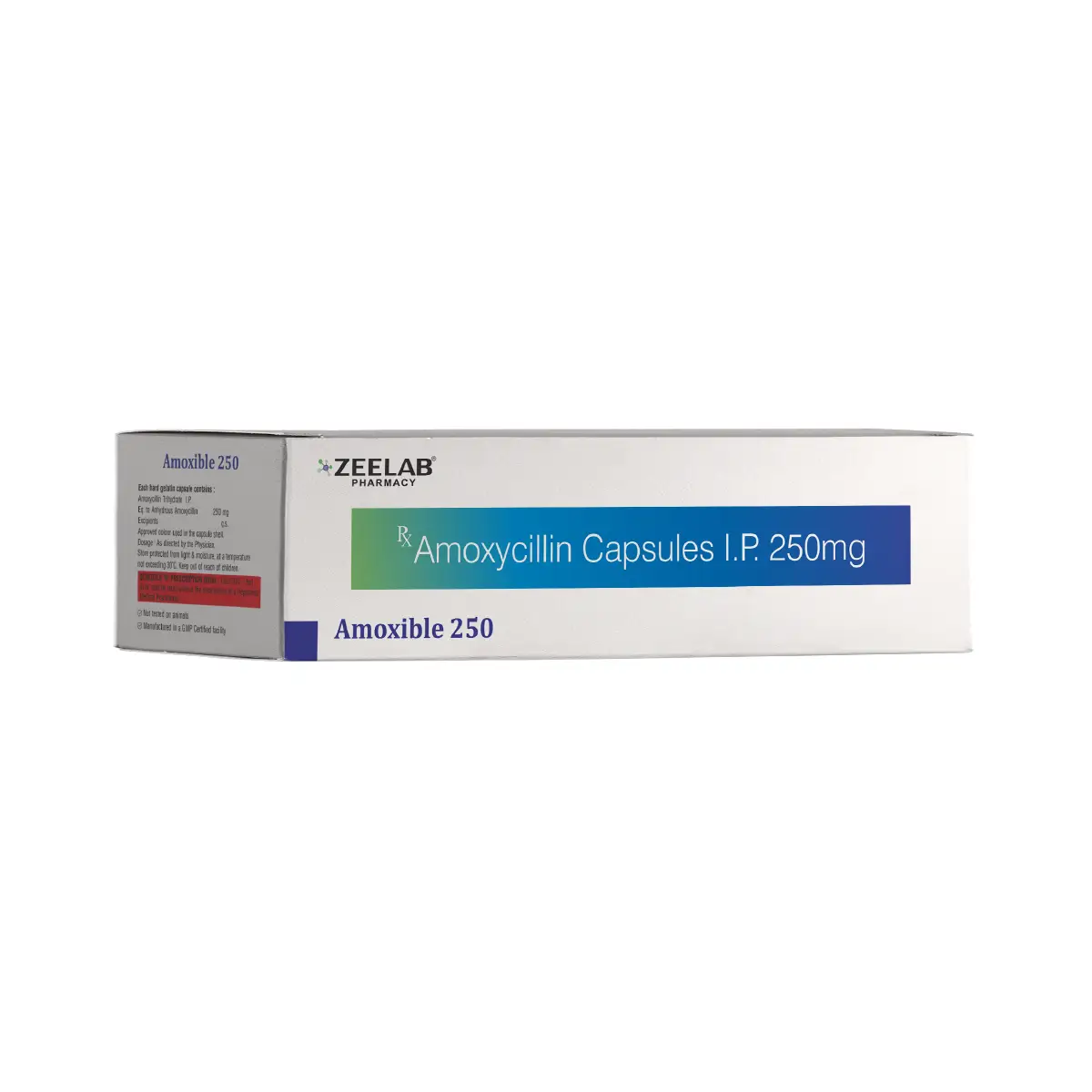
Amoxible 250 Antibiotic Capsule contains amoxicillin 250 mg, a penicillin-class antibiotic that works by inhibiting bacterial cell wall formation, helping eliminate infection-causing bacteria.
- Composition: Amoxicillin 250 mg
- Benefits: Helps manage bacterial infections affecting the throat, chest, skin, ears, urinary tract, and teeth.
Zithrozem 500 Tablet
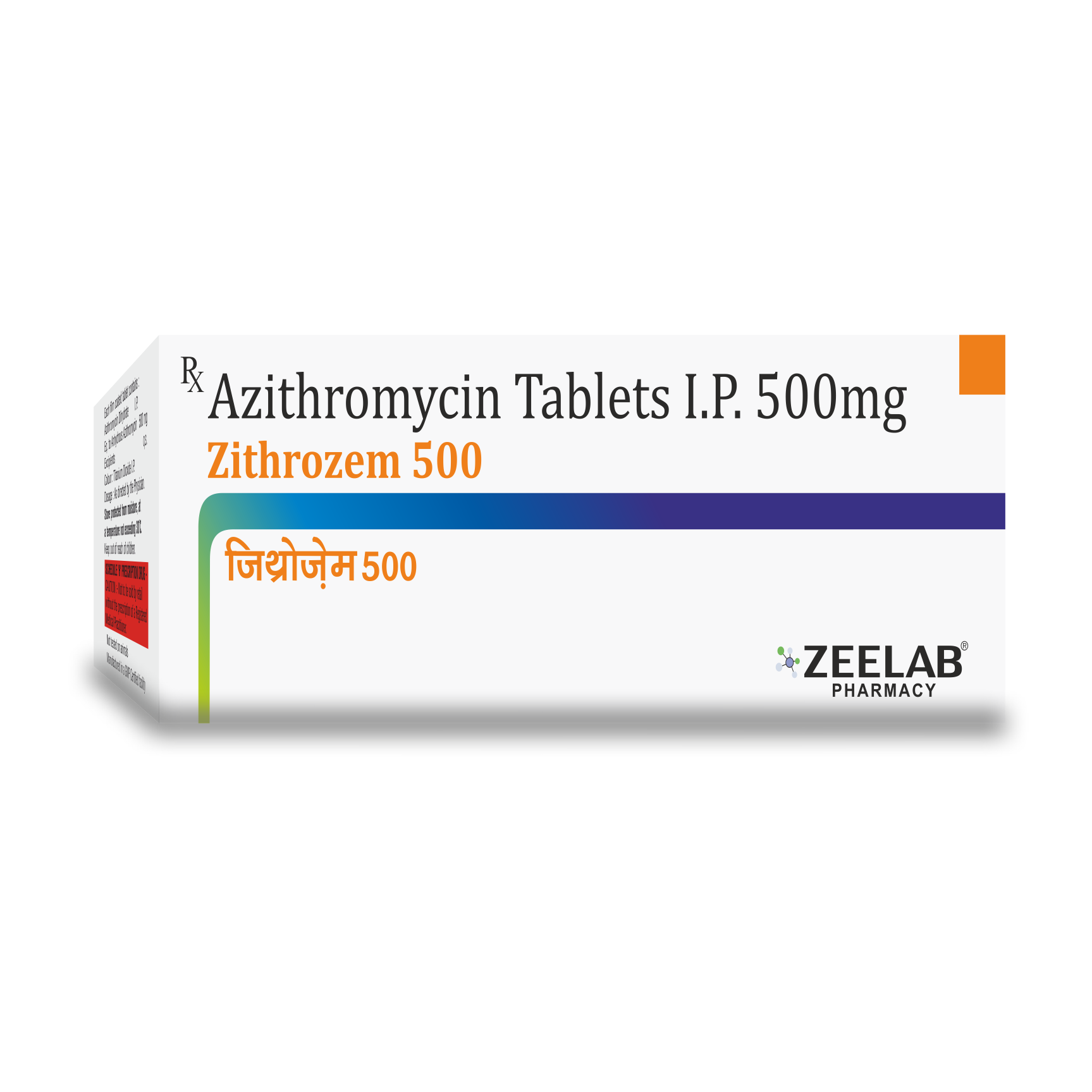
Zithrozem 500 Antibiotic Tablet contains azithromycin 500 mg, a macrolide antibiotic that works by stopping bacterial protein synthesis, helping control bacterial growth and infection.
- Composition: Azithromycin 500 mg
- Benefits: Helps treat bacterial infections affecting the throat, lungs, ears, skin, and respiratory tract.
Side effects of Azithromycin and Amoxicillin
As is the case with any other medicines, these two antibiotics are prone to having side effects; however, not all people may show the same side effects or with the same intensity.
If you observe any exaggerated response, consult your doctor immediately.
|
Common side effects of Azithromycin |
Common side effects of Amoxicillin |
|
Nausea/vomiting |
Rash |
|
Abdominal pain |
Diarrhea |
|
Temporary change in their taste sensation |
Nausea/vomiting |
|
Digestive disturbances |
Allergic reactions |
Safety, Precautions and Drug Interactions
Follow proper dosage instructions, complete the prescribed antibiotic course, and consult a doctor to reduce side effects, allergies, and antibiotic resistance risks.
|
Factor |
Azithromycin |
Amoxicillin |
|
Allergy considerations |
Can be used in penicillin-allergic patients |
Can not be used in patients with a penicillin allergy |
|
Drug interactions |
May interact with statins and drugs affecting heart rhythm |
May interact with blood-thinning agents and some other medicines |
|
Pregnancy safety |
May be prescribed if considered necessary |
May be prescribed if considered necessary |
|
Breastfeeding safety |
Can be used under medical supervision |
Can be used under medical supervision |
|
Important precaution |
Inform your doctor about ongoing medications and heart conditions |
Inform your doctor about allergies and all current medications |
Can You Take Azithromycin and Amoxicillin Together?
Yes, Azithromycin and Amoxicillin may be prescribed together in certain respiratory infections to cover a broader range of bacteria. However, this combination should only be used under a doctor's supervision.
Patients with a penicillin allergy should generally avoid Amoxicillin. Always follow your healthcare provider's advice before taking antibiotics together.
Which Is Better: Azithromycin or Amoxicillin?
There is no universally better option between Azithromycin and Amoxicillin. The choice depends on clinical evaluation and infection type.
|
Point |
Key Idea |
|
Depends on infection type |
Azithromycin and Amoxicillin work on different bacteria; the choice depends on the infection. |
|
Doctor’s diagnosis importance |
Only a doctor can select the right antibiotic based on infection and patient factors. |
|
Antibiotic resistance concerns |
Misuse of either drug can lead to antibiotic resistance; proper use is essential. |
Conclusion:
Azithromycin and Amoxicillin have different spectra and indications for use. Amoxicillin is frequently used for ear, pharynx and dental infections, azithromycin for atypical respiratory infections and in patients allergic to penicillin.
The effectiveness of any antibiotic depends on the correct choice for the type of infection, clinical diagnosis and advice of the physician. Proper use improves outcomes and prevents treatment failure.
Never take antibiotics without a prescription from your doctor, as they may have side effects that can lead to antibiotic resistance.
Frequently Asked Questions (FAQs)
Ans.No, amoxicillin and azithromycin are different antibiotics with different drug classes, uses, and mechanisms for treating bacterial infections.
Ans.Neither antibiotic is universally stronger; effectiveness depends on the infection type, bacteria involved, patient condition, and antibiotic resistance patterns.
Ans.The more effective antibiotic depends on the bacterial infection, medical history, allergies, and the doctor’s assessment of likely bacterial resistance.
Ans.No. Both Azithromycin and Amoxicillin should only be taken after a doctor’s prescription to avoid resistance and side effects.
Ans.The better antibiotic depends on the respiratory infection type, suspected bacteria, patient allergies, and the doctor’s evaluation of treatment needs.
Ans.Most bronchitis cases are viral, but when bacterial infection is suspected, doctors may choose azithromycin or amoxicillin based on symptoms.
Ans.Yes, both azithromycin and amoxicillin require a doctor’s prescription because improper antibiotic use may increase bacterial resistance risks.
Ans.Azithromycin may replace amoxicillin in some cases, especially with penicillin allergy, but antibiotic substitution should only follow medical advice.
Ans.Yes, both are commonly used in children, but only under proper pediatric dosage prescribed by a doctor.
Ans.Amoxicillin can usually be taken with or without food, while azithromycin is often better tolerated when taken after food (as advised by a doctor).
References
- https://www.ncbi.nlm.nih.gov/books/NBK482250/
- https://www.accessdata.fda.gov/drugsatfda_docs/label/2015/50542s02950754s01950760s01950761s016lbl.pdf
- https://www.nhs.uk/medicines/amoxicillin/
- https://www.nhs.uk/medicines/azithromycin/
- https://www.accessdata.fda.gov/drugsatfda_docs/label/2017/050710s44-050711s41-050784s28lbl.pdf
- https://www.ncbi.nlm.nih.gov/books/NBK557766/
Recent Blogs






Disclaimer : Zeelab Pharmacy provides health information for knowledge only. Do not self-medicate. Always consult a qualified doctor before starting, stopping, or changing any medicine or treatment.


₹ 0
0
Items added
Quick Links
Categories
Our Policies

Our Socials


Subscribe

2026 Copyright By © Zeelab Pharmacy Private Limited. All Rights Reserved
Our Payment Partners

 Added!