

Hypothyroidism vs Hyperthyroidism: Key Differences, Symptoms, Causes, TSH Levels, Diagnosis & Treatment
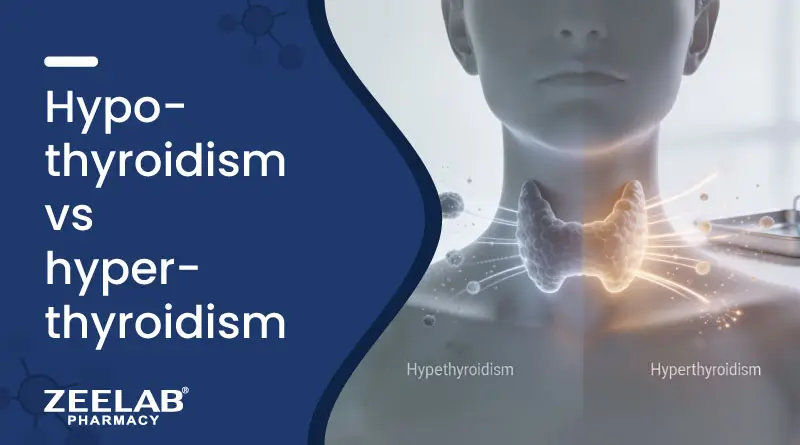
Thyroid disorders are so common in India that almost everyone knows a person who suffers from them. About 42 million people in India are affected by thyroid diseases, which are related to the butterfly-shaped gland in the neck that regulates metabolism, heart rate, body temperature and energy levels.
Two common diseases include hypothyroidism and hyperthyroidism, which happen due to underactivity and overactivity of the thyroid gland, respectively.
Even after affecting the same gland, these two diseases have different responses in the body.
Let's learn the differences between hypothyroidism and hyperthyroidism in terms of their symptoms, causes, diagnosis, treatment, etc.
Hypothyroidism vs Hyperthyroidism: Quick Comparison Table
Before diving deep into our topic, let’s quickly compare the two common thyroid disorders, i.e., hyperthyroidism and hypothyroidism.
|
Feature |
Hypothyroidism |
Hyperthyroidism |
|
Thyroid activity |
Underactive |
Overactive |
|
Hormone levels |
T₃ and T₄: Low |
T₃ and T₄: High |
|
Metabolism |
Slow |
Fast |
|
Weight |
Weight gain |
Weight loss |
|
Heart rate |
Low |
High |
|
Energy |
Weakness |
Restlessness |
|
Appetite |
Decreased or normal |
Increased |
|
Temperature tolerance |
Sensitivity to cold |
Sensitivity to heat |
|
Common causes |
Hashimoto's disease, iodine deficiency |
Graves' disease, toxic nodules |
|
Common treatment |
Levothyroxine |
Antithyroid medicines, radioactive iodine, surgery |
What is the Thyroid Gland?
The thyroid is a small butterfly-shaped gland located in the neck just under the Adam’s apple. Its job is to produce T₄ and T₃ hormones that regulate metabolism, heart rate, body temperature and energy levels in the body.
How Does the Thyroid Gland Work?
The thyroid gland absorbs iodine and produces the hormones T₃ and T₄, which are responsible for regulating body temperature, heart rate, metabolism and energy production. It does this through the following process:
- Thyroid-stimulating hormone (TSH) is secreted from the pituitary gland.
- TSH then signals the thyroid gland to produce more hormone.
- The thyroid gland produces thyroxine (T₄) and triiodothyronine (T₃).
- T₃ and T₄ help to regulate body temperature, growth, metabolism and heart rate.
What is Hypothyroidism?
Hypothyroidism occurs when your thyroid gland does not produce enough thyroid hormone. This slows down biological functions, and symptoms can include physical weariness, weight gain, constipation and feeling cold.
According to a study conducted in eight cities of India, around 1 in every 10 adults has hypothyroidism.
What is hyperthyroidism?
Hyperthyroidism is when the thyroid gland makes too much thyroid hormone. This speeds up the body’s metabolism and can lead to weight loss, a rapid heartbeat (tachycardia), anxiety, and excessive sweating.
Hypothyroidism and Hyperthyroidism: Key Differences
The major differences between the characteristics of hypothyroidism and hyperthyroidism include the following:
|
Feature |
Hypothyroidism |
Hyperthyroidism |
|
Hormone production |
Low |
High |
|
Metabolism |
Slow |
Fast |
|
Body weight |
Gain |
Loss |
|
Appetite |
Normal or reduced |
Increased |
|
Heart rate |
Slow |
Fast |
|
Blood pressure |
May be low or normal |
Often increased |
|
Body temperature |
Feels cold |
Feels hot |
|
Mood |
Depression, low mood |
Anxiety, irritability |
|
Sleep |
Excessive sleepiness |
Difficulty sleeping |
|
Digestion |
Constipation |
Frequent bowel movements |
|
Menstrual cycle |
Heavy or irregular periods |
Light or irregular periods |
|
Hair |
Dry, thinning hair |
Fine, thinning hair |
|
Skin |
Dry and rough |
Warm and moist |
|
Eyes |
Usually normal |
Bulging eyes in Graves' disease |
|
Cholesterol |
Often high |
Often low |
Hypothyroidism vs Hyperthyroidism Symptoms
These two thyroid disorders depend on how much thyroid hormone is produced by the body and show different symptoms that help to differentiate between hyperthyroidism and hypothyroidism.
|
Hypothyroidism |
Hyperthyroidism |
|
Weight gain |
Weight loss |
|
Fatigue |
Restlessness |
|
Cold intolerance |
Heat intolerance |
|
Slow heartbeat |
Rapid heartbeat |
|
Dry skin |
Sweaty skin |
|
Constipation |
Frequent bowel movements |
|
Depression |
Anxiety |
|
Hair thinning |
Hair loss |
|
Puffy face |
Bulging eyes (Graves' disease) |
|
Muscle weakness |
Muscle tremors |
What Causes Hypothyroidism and Hyperthyroidism?
There are many reasons why the production of thyroid hormone can be affected. It is important to find the reason so that the correct treatment can be given.
Hashimoto’s thyroiditis is the most common cause of hypothyroidism, while Graves’ disease is the most common cause of hyperthyroidism.
|
Hypothyroidism |
Hyperthyroidism |
|
Hashimoto's thyroiditis |
Graves' disease |
|
Thyroid surgery |
Toxic thyroid nodules |
|
Radioactive iodine treatment |
Thyroiditis |
|
Iodine deficiency |
Excess iodine intake |
|
Certain medications |
Certain medications |
How to Diagnose Hypothyroidism and Hyperthyroidism?
The diagnosis of thyroid disorders (hypothyroidism and hyperthyroidism) is usually made by assessing symptoms, medical history (patient and family), and physical examination.
Healthcare professionals may conduct the following tests:
|
Test |
Why is it done |
|
TSH (Thyroid Stimulating Hormone) |
Primary screening test for assessing thyroid function. |
|
Free T₃ |
Determines active thyroid hormone that is useful in diagnosing hyperthyroidism. |
|
Free T₄ |
To find thyroxine levels to establish if the thyroid is hypo- or hyperactive. |
|
Thyroid Antibody Tests |
Used to help diagnose autoimmune thyroid diseases like Hashimoto's thyroiditis and Graves' disease. |
|
Thyroid Ultrasound |
To check the size, shape, and nodules or goitre in the thyroid gland. |
|
Radioactive Iodine Uptake (RAIU) Test |
Measures how much iodine the thyroid absorbs to help determine the cause of hyperthyroidism. |
Understanding TSH, T₃ and T₄ Levels
The levels of TSH, T₃, and T₄ help determine what thyroid disorder a person might be suffering from.
- High TSH, especially with low T₄, usually shows hypothyroidism.
- While low TSH, with high T₄, suggests hyperthyroidism.
Thyroid hormone levels in cases of hypothyroidism and hyperthyroidism may become the following:
|
Test |
Normal Condition |
Hypothyroidism |
Hyperthyroidism |
|
TSH |
0.4–4.0 mIU/L |
High (usually >4.0 mIU/L) |
Low (usually |
|
Free T₃ |
3.1–6.8 pmol/L |
Low or normal |
High |
|
Free T₄ |
12–22 pmol/L |
Low |
High |
|
Metabolism |
Normal |
Slow |
Fast |
Treatment of Hypothyroidism and Hyperthyroidism
The common medications and measures used for hyperthyroidism and hypothyroidism treatment may include the following:
|
Hypothyroidism |
Hyperthyroidism |
|
Levothyroxine hormone replacement |
Antithyroid medicines (Methimazole, carbimazole, and Propylthiouracil) |
|
Regular thyroid blood tests |
Beta blockers for symptom relief |
|
Healthy lifestyle |
Radioactive iodine therapy |
|
Lifelong treatment in many cases |
Surgery in selected patients |
Also Read: Best Foods for Thyroid Patients
Can Hypothyroidism Become Hyperthyroidism (or vice versa)?
Even though these two disorders are completely different from each other, under some conditions, a transition may happen.
- Hyperthyroidism may become hypothyroidism because of radioactive iodine treatment or surgery.
- With lesser chances, autoimmune thyroid diseases may lead to a shift from hypo- to hyperthyroidism.
- Both diseases cannot occur in a person at the same time.
Which is More Dangerous: Hypothyroidism or Hyperthyroidism?
This question comes to everyone when they are reading about these conditions. The answer is that neither of these can be considered more dangerous.
Both can cause serious issues if untreated. Complications may include:
|
Body System |
Hypothyroidism |
Hyperthyroidism |
|
Heart |
High cholesterol, heart disease |
Irregular heartbeat, heart failure |
|
Bones |
Mild impact |
Bone loss, osteoporosis |
|
Brain |
Depression, memory problems |
Anxiety, irritability |
|
Pregnancy |
Miscarriage, developmental problems |
Preterm birth, pregnancy complications |
|
Children |
Delayed growth |
Growth and developmental problems |
Can You Prevent Thyroid Disorders?
You can’t always prevent thyroid problems, especially with autoimmune conditions. But there are a few things you can do to help keep your thyroid healthy:
- Get enough iodine but don’t take too much.
- Correct use of your thyroid medications
- Treatment of autoimmune diseases with medications
- Thyroid function tests if you have a family history
- If there is a family history, get thyroid function testing done.
- Going for frequent medical check-ups
When Should You See a Doctor?
Proper assessment and thyroid tests will help determine the root cause and provide proper treatment. See a health practitioner if you experience any of the following symptoms:
- Always being tired
- Unexpected weight gain or loss with no explanation
- Rapid or slow heartbeat
- Swelling of the neck
- Thinning hair or severe hair loss
- Irregular periods
- Anxiety, depression or mood changes
- Feeling hotter or colder than usual
Conclusion
To put it simply, hypothyroidism and hyperthyroidism are two widespread diseases of the thyroid gland, caused by the gland’s incorrect functioning.
Hypothyroidism occurs when the thyroid does not make enough thyroid hormones. Hyperthyroidism occurs when the thyroid makes too much thyroid hormone. Both have different symptoms and different treatment methods.
Early diagnosis, medical care and frequent monitoring allow patients with thyroid issues to successfully manage their illness and have a healthy and active life.
Frequently Asked Questions (FAQs)
Ans.Hypothyroidism occurs when the thyroid gland produces too little hormone, slowing body functions. Hyperthyroidism produces too much hormone, speeding up metabolism and organ activity.
Ans.Symptoms alone are not enough. A doctor confirms the diagnosis using your medical history, physical examination, and thyroid blood tests, like TSH, free T₃, and free T₄.
Ans.Doctors usually recommend a thyroid profile including TSH, free T₄, free T₃, and thyroid antibody tests to diagnose thyroid disorders accurately.
Ans.The normal TSH range for most adults is approximately 0.4–4.0 mIU/L, though the reference range may vary slightly between laboratories.
Ans.Yes. A high TSH level usually indicates hypothyroidism because the pituitary gland produces more TSH to stimulate an underactive thyroid.
Ans.Low TSH with high free T₄ usually indicates hyperthyroidism, where excess thyroid hormone suppresses TSH production by the pituitary gland.
Ans.Hypothyroidism commonly causes weight gain because reduced thyroid hormone slows metabolism, making the body burn fewer calories than usual.
Ans.Hyperthyroidism commonly causes weight loss because excess thyroid hormone speeds up metabolism, increasing calorie burning even with a normal appetite.
Ans.Hashimoto's disease damages the thyroid and causes hypothyroidism, while Graves' disease overstimulates the thyroid, leading to hyperthyroidism.
Ans.Goitre can occur in both hypothyroidism and hyperthyroidism. It is an enlargement of the thyroid gland caused by different underlying conditions.
Ans.Thyronorm contains levothyroxine and is used to treat hypothyroidism by replacing thyroid hormone. It is not used for hyperthyroidism.
Ans.It is uncommon, but autoimmune thyroid disease or certain treatments may cause hypothyroidism to later develop into hyperthyroidism in rare cases.
Ans.Yes. Hyperthyroidism may become hypothyroidism after radioactive iodine treatment, thyroid surgery, or successful treatment that reduces thyroid hormone production.
Ans.A person usually has one condition at a time, but rare autoimmune thyroid disorders can cause switching between hypothyroidism and hyperthyroidism.
Ans.Neither is inherently more dangerous. Without treatment, both can cause serious complications affecting the heart, bones, brain, pregnancy, and overall health.
Ans.You should get a thyroid test if you have unexplained weight changes, persistent fatigue, neck swelling, irregular periods, or a family history of thyroid disease.
Ans.Yes. Hyperthyroidism commonly causes anxiety, nervousness, and irritability, while hypothyroidism may contribute to depression, low mood, or difficulty concentrating.
Ans.Both hypothyroidism and hyperthyroidism are more common in women than men, especially autoimmune thyroid disorders like Hashimoto's disease and Graves' disease.
References
- https://pmc.ncbi.nlm.nih.gov/articles/PMC10873132/
- https://pubmed.ncbi.nlm.nih.gov/23961480/
- https://pmc.ncbi.nlm.nih.gov/articles/PMC3169866/
- https://pmc.ncbi.nlm.nih.gov/articles/PMC10071442/
- https://pmc.ncbi.nlm.nih.gov/articles/PMC5771276/
- https://www.ncbi.nlm.nih.gov/books/NBK600943/table/ch3.tab10/?
- https://www.nhs.uk/conditions/overactive-thyroid-hyperthyroidism/diagnosis/
Recent Blogs






Disclaimer : Zeelab Pharmacy provides health information for knowledge only. Do not self-medicate. Always consult a qualified doctor before starting, stopping, or changing any medicine or treatment.


₹ 0
0
Items added
Quick Links
Categories
Our Policies

Our Socials


Subscribe

2026 Copyright By © Zeelab Pharmacy Private Limited. All Rights Reserved
Our Payment Partners

 Added!